Word Explanation
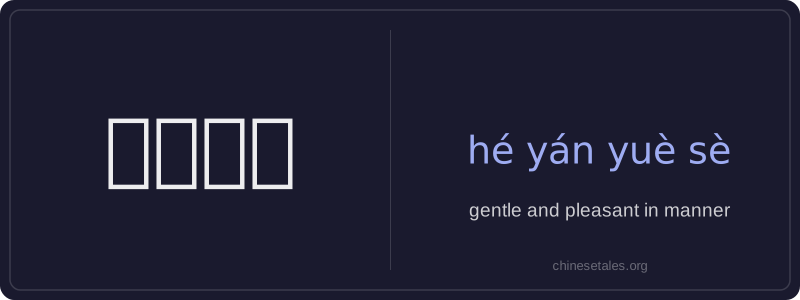
和颜悦色 is an idiomatic four-character expression describing someone’s gentle, warm, and pleasant demeanor—especially in facial expression and tone of voice. Literally, 和 (hé) means 'harmonious' or 'gentle'; 颜 (yán) refers to 'face' or 'facial appearance'; 悦 (yuè) means 'pleased' or 'delighted'; and 色 (sè) means 'color' or 'complexion'. Together, they evoke the image of a calm, smiling face radiating kindness and approachability.
This phrase is commonly used to describe how teachers, parents, service staff, or leaders interact with others—emphasizing patience, empathy, and emotional warmth. It often appears in formal or literary contexts, but also in everyday speech when praising someone’s considerate manner. While it describes outward behavior, it strongly implies inner kindness and respect for others.
Example Sentences
Related Words
见面
见面 literally means 'see face' — combining 见 (t
背后
背后 literally means 'back + behind' and functions
我的
我的 (wǒ de) is a possessive pronoun meaning 'my'
中学
'Zhōngxué' literally combines 'zhōng' (middle)
面条
‘面条’ (miàn tiáo) literally means ‘flour str
后来
Later (hòulái) is an adverb meaning 'afterwards'
在家
'Zài jiā' literally combines the preposition 'z
不对
不对 (bù duì) literally combines 不 (bù), meani