Word Explanation
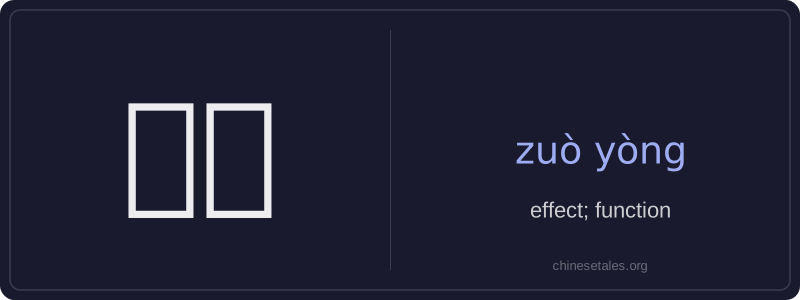
Zuò yòng is a noun meaning 'effect' or 'function'—the way something operates, influences, or contributes within a system. The character 作 (zuò) carries the sense of 'to do' or 'to act', while 用 (yòng) means 'to use' or 'utility'. Together, they convey the idea of 'what something does' or 'how it is used' — not just physical action, but purposeful impact. It’s commonly used in scientific, medical, technical, and everyday contexts to describe how substances, devices, people, or policies produce results.
This word often appears after modifiers indicating type or domain, such as 药理作用 (pharmacological effect), 社会作用 (social function), or 积极作用 (positive effect). Unlike verbs like 起作用 ('to take effect'), 作用 itself is a noun and typically requires a verb (e.g., 有, 发挥, 产生) to form a complete predicate. It rarely stands alone as a verb and is never used as an adjective.
Example Sentences
Related Words
见面
见面 literally means 'see face' — combining 见 (t
背后
背后 literally means 'back + behind' and functions
我的
我的 (wǒ de) is a possessive pronoun meaning 'my'
中学
'Zhōngxué' literally combines 'zhōng' (middle)
面条
‘面条’ (miàn tiáo) literally means ‘flour str
后来
Later (hòulái) is an adverb meaning 'afterwards'
在家
'Zài jiā' literally combines the preposition 'z
不对
不对 (bù duì) literally combines 不 (bù), meani