Word Explanation
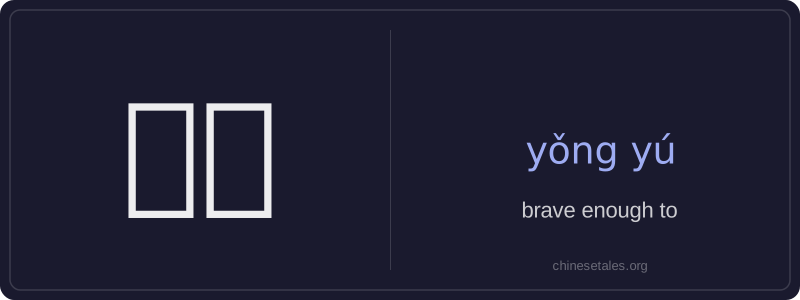
'Yǒng yú' is an adverbial phrase meaning 'brave enough to' or 'courageous in doing something.' It combines 勇 (yǒng), meaning 'bravery' or 'courage,' and 于 (yú), a classical preposition that introduces the action or domain where courage is demonstrated. Though 于 is rarely used alone in modern spoken Chinese, it appears idiomatically in set phrases like this one, always followed by a verb (e.g., 勇于承认, 勇于尝试). The structure signals moral or psychological readiness—not physical bravery—and is commonly used in formal speech, education, and self-improvement contexts.
This phrase carries a positive, aspirational tone and often appears in motivational language, leadership discourse, or personal reflection. It implies not just willingness but principled resolve: the speaker or subject acts despite fear, shame, or difficulty. Unlike standalone adjectives like 勇敢 (yǒnggǎn), 勇于 must attach directly to a verb and cannot modify nouns. Its usage reflects Confucian-influenced values emphasizing moral courage and proactive integrity.
Example Sentences
Related Words
见面
见面 literally means 'see face' — combining 见 (t
背后
背后 literally means 'back + behind' and functions
我的
我的 (wǒ de) is a possessive pronoun meaning 'my'
中学
'Zhōngxué' literally combines 'zhōng' (middle)
面条
‘面条’ (miàn tiáo) literally means ‘flour str
后来
Later (hòulái) is an adverb meaning 'afterwards'
在家
'Zài jiā' literally combines the preposition 'z
不对
不对 (bù duì) literally combines 不 (bù), meani