Word Explanation
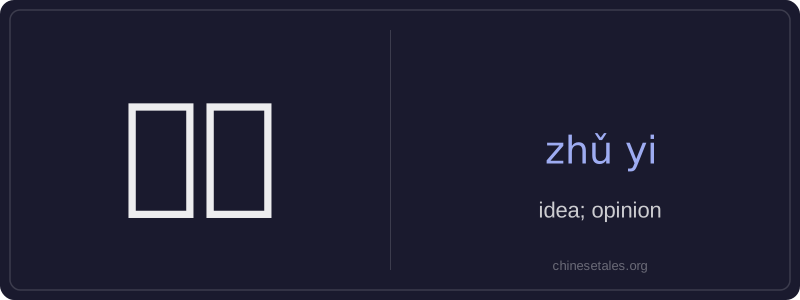
'主意' (zhǔyi) literally combines '主' (zhǔ), meaning 'master' or 'primary', and '意' (yì), meaning 'idea' or 'intention'. Together, they form a noun meaning 'idea', 'plan', 'opinion', or 'suggestion' — something one has thought through and considers actionable. It often implies a personal, deliberate thought rather than a passing notion.
This word is commonly used in everyday decision-making contexts: choosing what to eat, how to solve a problem, or what course of action to take. It appears frequently in spoken Chinese, especially in questions like '你有什么主意?' ('What’s your idea?') or statements expressing initiative ('我有个主意。' — 'I’ve got an idea.'). Unlike the more formal '建议' (jiànyì, 'suggestion') or abstract '想法' (xiǎngfǎ, 'thought'), '主意' carries a sense of practicality and ownership — the idea belongs to and is ready to be acted upon by the speaker.
Example Sentences
Related Words
见面
见面 literally means 'see face' — combining 见 (t
背后
背后 literally means 'back + behind' and functions
我的
我的 (wǒ de) is a possessive pronoun meaning 'my'
中学
'Zhōngxué' literally combines 'zhōng' (middle)
面条
‘面条’ (miàn tiáo) literally means ‘flour str
后来
Later (hòulái) is an adverb meaning 'afterwards'
在家
'Zài jiā' literally combines the preposition 'z
不对
不对 (bù duì) literally combines 不 (bù), meani