Word Explanation
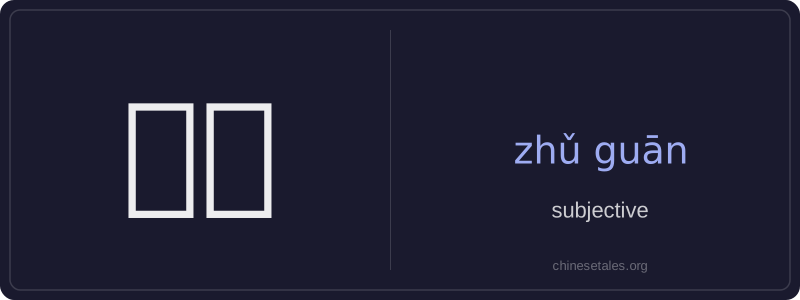
主观 (zhǔ guān) means 'subjective' — describing thoughts, judgments, or experiences that are based on personal feelings, opinions, or interpretations rather than objective facts or evidence. The character 主 (zhǔ) means 'main' or 'master', suggesting centrality or ownership; 观 (guān) means 'view', 'perspective', or 'observation'. Together, they literally convey 'one's own view' or 'the view held by the subject'. This term is frequently used in academic, psychological, and everyday contexts to contrast with 客观 (kè guān, 'objective').
主观 often carries a subtle evaluative tone: while neutral in formal usage, it may imply bias, lack of objectivity, or unreliability when used critically (e.g., in debates or evaluations). It commonly modifies nouns like 意见 (opinion), 判断 (judgment), or 态度 (attitude), and appears in phrases like 主观臆断 (making assumptions without evidence). It is rarely used alone as a noun and almost never as a verb.
Example Sentences
Related Words
见面
见面 literally means 'see face' — combining 见 (t
背后
背后 literally means 'back + behind' and functions
我的
我的 (wǒ de) is a possessive pronoun meaning 'my'
中学
'Zhōngxué' literally combines 'zhōng' (middle)
面条
‘面条’ (miàn tiáo) literally means ‘flour str
后来
Later (hòulái) is an adverb meaning 'afterwards'
在家
'Zài jiā' literally combines the preposition 'z
不对
不对 (bù duì) literally combines 不 (bù), meani