Word Explanation
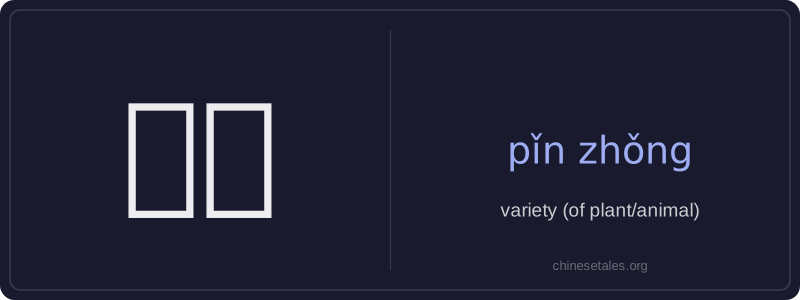
'品种' (pǐn zhǒng) literally combines '品' (pǐn), meaning 'category', 'grade', or 'type', and '种' (zhǒng), meaning 'kind' or 'species'. Together, they refer specifically to a cultivated or naturally occurring variety within a species—especially in agriculture, horticulture, and animal husbandry. It emphasizes distinct, identifiable traits such as color, size, yield, or temperament that set one variety apart from others of the same broader species.
This term is commonly used when discussing selective breeding, conservation, food production, or botanical classification—for example, distinguishing between different apple varieties like Fuji or Gala, or chicken breeds like Silkie and Leghorn. Unlike the more general word '种类' (zhǒng lèi), which means 'type' or 'category' broadly, '品种' implies intentional recognition and naming of a stable, heritable lineage. It’s rarely used for abstract concepts or non-biological groupings.
Example Sentences
Related Words
见面
见面 literally means 'see face' — combining 见 (t
背后
背后 literally means 'back + behind' and functions
我的
我的 (wǒ de) is a possessive pronoun meaning 'my'
中学
'Zhōngxué' literally combines 'zhōng' (middle)
面条
‘面条’ (miàn tiáo) literally means ‘flour str
后来
Later (hòulái) is an adverb meaning 'afterwards'
在家
'Zài jiā' literally combines the preposition 'z
不对
不对 (bù duì) literally combines 不 (bù), meani