Word Explanation
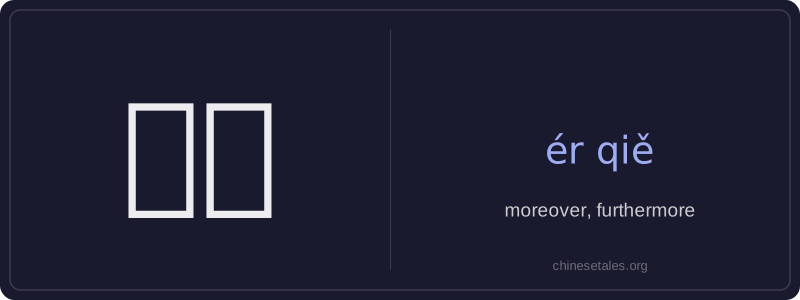
而且 (ér qiě) is a coordinating conjunction meaning 'moreover' or 'furthermore'. It links two related statements, adding emphasis to the second idea — usually something that strengthens, extends, or supports the first. The character 而 (ér) historically means 'and' or 'but', often indicating contrast or connection; 且 (qiě) means 'also', 'still', or 'besides'. Together, they form a fixed compound expressing additive logic — not mere listing, but logical progression or reinforcement.
This word appears frequently in spoken and written Mandarin, especially in explanations, arguments, or justifications. It’s neutral in register — appropriate in both casual conversation and formal writing — and always comes before the clause it introduces. Unlike English 'and', 而且 cannot begin a sentence; it must connect clauses within the same sentence. It typically follows another clause (often introduced by a comma), and the second clause should carry new, reinforcing information.
Example Sentences
Related Words
见面
见面 literally means 'see face' — combining 见 (t
背后
背后 literally means 'back + behind' and functions
我的
我的 (wǒ de) is a possessive pronoun meaning 'my'
中学
'Zhōngxué' literally combines 'zhōng' (middle)
面条
‘面条’ (miàn tiáo) literally means ‘flour str
后来
Later (hòulái) is an adverb meaning 'afterwards'
在家
'Zài jiā' literally combines the preposition 'z
不对
不对 (bù duì) literally combines 不 (bù), meani