Word Explanation
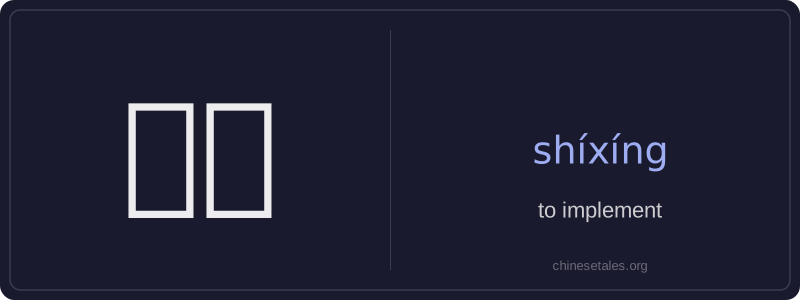
‘实行’ (shíxíng) is a verb meaning 'to implement', 'to put into practice', or 'to carry out'. It combines the characters 实 (shí), meaning 'real' or 'actual', and 行 (xíng), meaning 'to go', 'to act', or 'to conduct'. Together, they convey the idea of turning something abstract—like a plan, policy, rule, or idea—into concrete action. It is commonly used in formal, official, or organizational contexts, such as government announcements, company directives, school regulations, or personal commitments.
The word often follows nouns indicating systems, methods, policies, or measures—for example, ‘实行改革’ (implement reforms) or ‘实行新规定’ (enforce new rules). Unlike more casual verbs like ‘做’ (do) or ‘用’ (use), ‘实行’ implies intentionality, structure, and follow-through. It is rarely used for spontaneous or minor actions; instead, it signals deliberate execution of a decided-upon course.
Example Sentences
Related Words
见面
见面 literally means 'see face' — combining 见 (t
背后
背后 literally means 'back + behind' and functions
我的
我的 (wǒ de) is a possessive pronoun meaning 'my'
中学
'Zhōngxué' literally combines 'zhōng' (middle)
面条
‘面条’ (miàn tiáo) literally means ‘flour str
后来
Later (hòulái) is an adverb meaning 'afterwards'
在家
'Zài jiā' literally combines the preposition 'z
不对
不对 (bù duì) literally combines 不 (bù), meani