Word Explanation
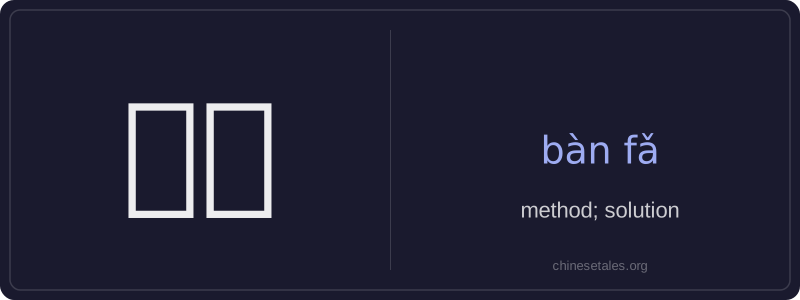
‘办法’ (bàn fǎ) is a common noun meaning ‘method,’ ‘way,’ or ‘solution’—something you use to deal with a problem or accomplish a task. The first character, 办 (bàn), means ‘to handle’ or ‘to manage,’ and the second, 法 (fǎ), means ‘law,’ ‘principle,’ or ‘method.’ Together, they literally suggest ‘a way of handling something,’ emphasizing practicality and intentionality. It’s neutral in register and widely used in everyday speech, writing, and problem-solving contexts—from household chores to workplace challenges.
You’ll often hear it in questions like ‘有没有什么办法?’ (Is there any way?) or statements like ‘我想到一个好办法’ (I’ve thought of a good solution). Unlike more formal terms like ‘策略’ (cèlüè, strategy) or technical ones like ‘算法’ (suànfǎ, algorithm), ‘办法’ feels grounded, accessible, and human-centered—it implies effort, creativity, and real-world applicability rather than theory or abstraction.
Example Sentences
Related Words
见面
见面 literally means 'see face' — combining 见 (t
背后
背后 literally means 'back + behind' and functions
我的
我的 (wǒ de) is a possessive pronoun meaning 'my'
中学
'Zhōngxué' literally combines 'zhōng' (middle)
面条
‘面条’ (miàn tiáo) literally means ‘flour str
后来
Later (hòulái) is an adverb meaning 'afterwards'
在家
'Zài jiā' literally combines the preposition 'z
不对
不对 (bù duì) literally combines 不 (bù), meani