Word Explanation
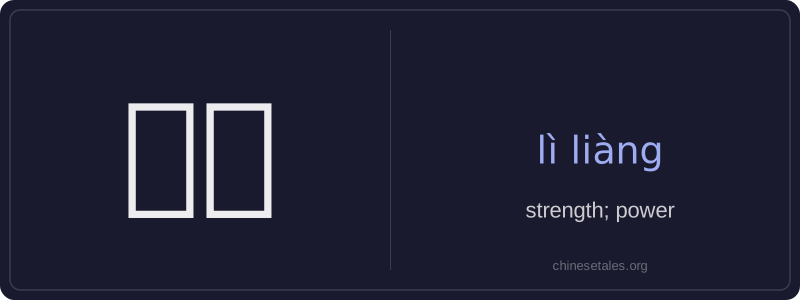
力量 (lì liàng) is a noun meaning 'strength' or 'power' — the physical, mental, or collective capacity to exert force, influence, or effect change. The first character 力 (lì) means 'force' or 'effort', often depicted as a muscular arm in ancient script; the second character 量 (liàng) means 'measure' or 'quantity', suggesting that strength here is understood as a measurable, substantial quality. Together, they convey not just raw power but a tangible, quantifiable capacity — whether describing an athlete’s muscle strength, a group’s unified resolve, or even an animal’s physical prowess.
This word is commonly used in both literal and figurative contexts: it appears in discussions of human ability ('mental strength'), social movements ('the power of public opinion'), and biology ('the strength of a tiger’s jaw'). It carries neutral-to-positive connotations and is standard in formal and informal speech, though it rarely stands alone without context — usually appearing with modifiers like 强大 (qiángdà, 'great') or 集体 (jítǐ, 'collective').
Example Sentences
Related Words
见面
见面 literally means 'see face' — combining 见 (t
背后
背后 literally means 'back + behind' and functions
我的
我的 (wǒ de) is a possessive pronoun meaning 'my'
中学
'Zhōngxué' literally combines 'zhōng' (middle)
面条
‘面条’ (miàn tiáo) literally means ‘flour str
后来
Later (hòulái) is an adverb meaning 'afterwards'
在家
'Zài jiā' literally combines the preposition 'z
不对
不对 (bù duì) literally combines 不 (bù), meani