Word Explanation
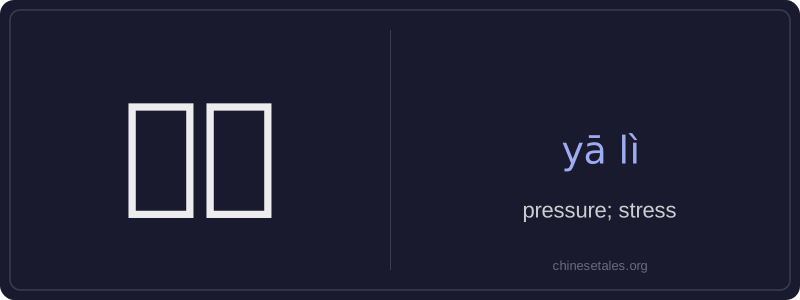
压力 (yā lì) literally combines 压 (yā, 'to press down' or 'to suppress') and 力 (lì, 'force' or 'power'), forming a compound noun meaning 'pressure' in both physical and psychological senses. In everyday usage, it most commonly refers to mental or emotional stress — the feeling of being overwhelmed by demands, responsibilities, or expectations, such as from work, school, or family.
The word is neutral in register and widely used across spoken and written Chinese. It appears frequently in discussions about well-being, workplace culture, academic performance, and social expectations. While it can describe physical pressure (e.g., blood pressure: 血压 xuè yā), context usually makes the intended sense clear — and when referring to psychological stress, it’s often paired with verbs like 感到 (gǎn dào, 'to feel'), 缓解 (huǎn jiě, 'to relieve'), or 增加 (zēng jiā, 'to increase').
Example Sentences
Related Words
见面
见面 literally means 'see face' — combining 见 (t
背后
背后 literally means 'back + behind' and functions
我的
我的 (wǒ de) is a possessive pronoun meaning 'my'
中学
'Zhōngxué' literally combines 'zhōng' (middle)
面条
‘面条’ (miàn tiáo) literally means ‘flour str
后来
Later (hòulái) is an adverb meaning 'afterwards'
在家
'Zài jiā' literally combines the preposition 'z
不对
不对 (bù duì) literally combines 不 (bù), meani