Word Explanation
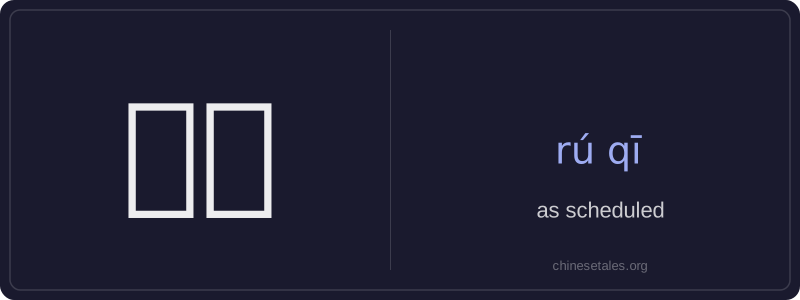
如期 (rú qī) is an adverb meaning 'as scheduled' or 'on time', indicating that something happens exactly according to a previously set time or plan. The character 如 (rú) means 'as', 'like', or 'in accordance with', while 期 (qī) means 'appointed time', 'due date', or 'schedule'. Together, they literally convey 'in accordance with the scheduled time'. This phrase emphasizes punctuality and reliability, often used in formal, written, or professional contexts—such as project updates, event announcements, or official reports.
Unlike colloquial expressions like 按时 (àn shí), 如期 carries a slightly more formal and literary tone. It frequently appears in compound structures like 如期举行 (rú qī jǔ xíng, 'to be held as scheduled'), 如期完成 (rú qī wán chéng, 'to be completed on schedule'), or 如期而至 (rú qī ér zhì, 'to arrive right on time'). It is rarely used alone and typically modifies verbs indicating occurrence, completion, or arrival.
Example Sentences
Related Words
见面
见面 literally means 'see face' — combining 见 (t
背后
背后 literally means 'back + behind' and functions
我的
我的 (wǒ de) is a possessive pronoun meaning 'my'
中学
'Zhōngxué' literally combines 'zhōng' (middle)
面条
‘面条’ (miàn tiáo) literally means ‘flour str
后来
Later (hòulái) is an adverb meaning 'afterwards'
在家
'Zài jiā' literally combines the preposition 'z
不对
不对 (bù duì) literally combines 不 (bù), meani