Word Explanation
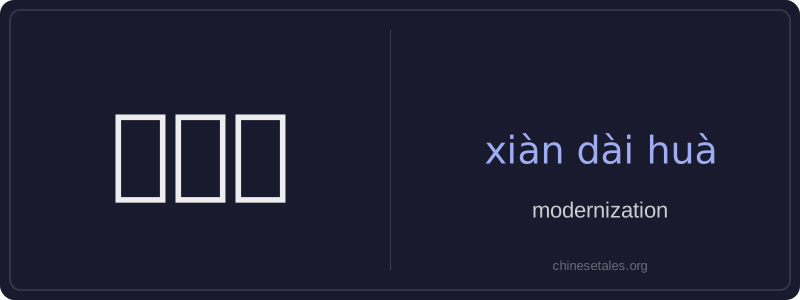
现代化 (xiàn dài huà) literally means 'becoming modern' — 现 (xiàn) means 'present' or 'current', 代 (dài) means 'era' or 'generation', and 化 (huà) is a suffix meaning 'to become' or 'transformation'. Together, they form a noun meaning 'modernization': the process of adopting advanced technology, efficient systems, and contemporary social, economic, and cultural practices. It’s commonly used in discussions about national development, urban planning, education reform, and infrastructure improvement.
The term carries positive, forward-looking connotations and appears frequently in official discourse, news reports, and academic writing. While it can refer to material progress (e.g., high-speed rail, digital services), it also implies broader societal advancement — such as improved governance, environmental sustainability, and equitable access to resources. Unlike Western usage that may emphasize industrialization alone, 现代化 in Chinese context often integrates tradition with innovation and stresses holistic, people-centered development.
Example Sentences
Related Words
见面
见面 literally means 'see face' — combining 见 (t
背后
背后 literally means 'back + behind' and functions
我的
我的 (wǒ de) is a possessive pronoun meaning 'my'
中学
'Zhōngxué' literally combines 'zhōng' (middle)
面条
‘面条’ (miàn tiáo) literally means ‘flour str
后来
Later (hòulái) is an adverb meaning 'afterwards'
在家
'Zài jiā' literally combines the preposition 'z
不对
不对 (bù duì) literally combines 不 (bù), meani