Word Explanation
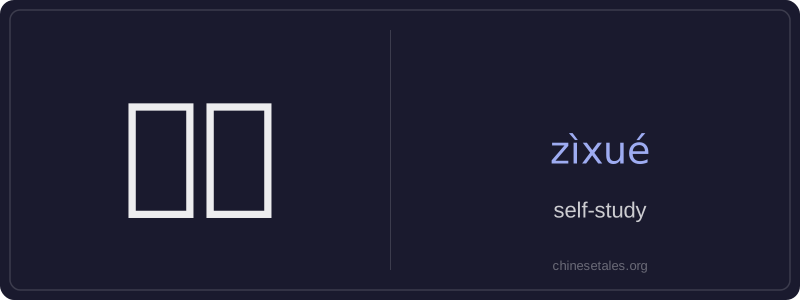
‘自学’ literally means ‘self-study’ — combining 自 (zì), meaning ‘self’ or ‘oneself’, and 学 (xué), meaning ‘to study’ or ‘to learn’. It refers to the process of learning something independently, without formal instruction from a teacher or institution. This word emphasizes personal initiative, discipline, and resourcefulness in acquiring knowledge or skills.
As both a noun and verb, ‘自学’ commonly appears in contexts related to education, career development, and lifelong learning — for example, learning a language, programming, or music on one’s own. It often implies using books, online courses, videos, or practice rather than attending classes. While it can describe any subject, it’s especially associated with fields where structured schooling is less common or where learners seek flexibility and autonomy.
Example Sentences
Related Words
见面
见面 literally means 'see face' — combining 见 (t
背后
背后 literally means 'back + behind' and functions
我的
我的 (wǒ de) is a possessive pronoun meaning 'my'
中学
'Zhōngxué' literally combines 'zhōng' (middle)
面条
‘面条’ (miàn tiáo) literally means ‘flour str
后来
Later (hòulái) is an adverb meaning 'afterwards'
在家
'Zài jiā' literally combines the preposition 'z
不对
不对 (bù duì) literally combines 不 (bù), meani