Word Explanation
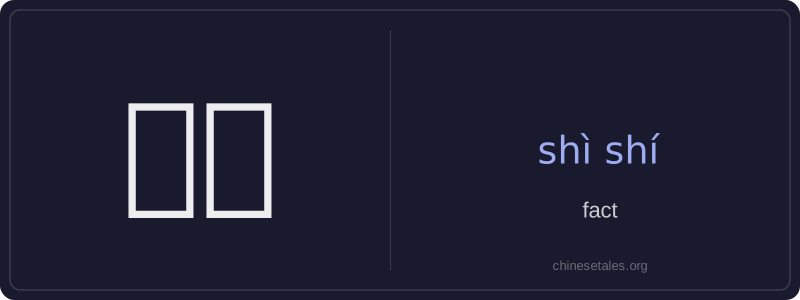
事实 (shìshí) means 'fact' — something that is objectively true, verifiable, and not based on opinion or imagination. The first character 事 (shì) means 'matter' or 'event', while the second 实 (shí) means 'real', 'true', or 'substantial'. Together, they form a compound noun emphasizing concrete reality: literally 'a real event' or 'a true matter'. This word is commonly used in formal writing, news reports, academic discussion, and everyday reasoning — for instance, when distinguishing between rumors and verified information.
事实 is often paired with verbs like 是 (shì, 'to be'), 揭示 (jiēshì, 'to reveal'), or based on (根据…事实). It frequently appears in phrases like 事实上 (shìshàng, 'in fact') and 事实证明 (shìshí zhèngmíng, 'facts prove that…'). Unlike colloquial alternatives such as 情况 (qíngkuàng, 'situation'), 事实 carries stronger connotations of objectivity and evidence-based truth.
Example Sentences
Related Words
见面
见面 literally means 'see face' — combining 见 (t
背后
背后 literally means 'back + behind' and functions
我的
我的 (wǒ de) is a possessive pronoun meaning 'my'
中学
'Zhōngxué' literally combines 'zhōng' (middle)
面条
‘面条’ (miàn tiáo) literally means ‘flour str
后来
Later (hòulái) is an adverb meaning 'afterwards'
在家
'Zài jiā' literally combines the preposition 'z
不对
不对 (bù duì) literally combines 不 (bù), meani