Word Explanation
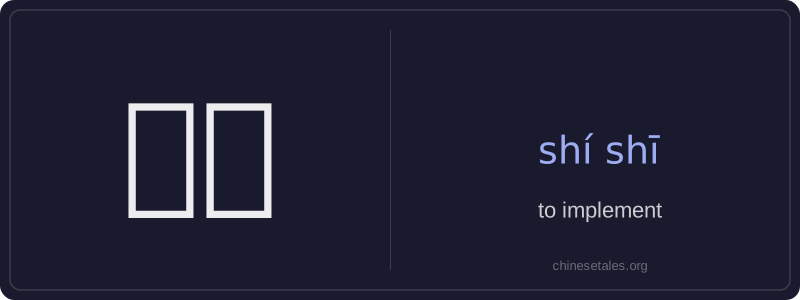
实施 (shí shī) is a formal verb meaning 'to implement' or 'to carry out'—especially plans, policies, laws, measures, or procedures. It combines 实 (shí), meaning 'real', 'actual', or 'concrete', and 施 (shī), meaning 'to apply', 'to exert', or 'to put into effect'. Together, they convey the idea of making something real through deliberate action—not just planning or discussing it, but executing it concretely. The word implies intentionality, structure, and often official or organizational authority.
实施 is commonly used in administrative, legal, medical, educational, and policy contexts—for example, implementing new regulations, a public health campaign, or a curriculum reform. It rarely appears in casual speech; instead, you’ll hear it in news reports, government documents, workplace meetings, or academic writing. Unlike more general verbs like 做 (zuò, 'to do') or 执行 (zhí xíng, 'to execute'), 实施 emphasizes the transition from theory or proposal to tangible, systematic action.
Example Sentences
Related Words
见面
见面 literally means 'see face' — combining 见 (t
背后
背后 literally means 'back + behind' and functions
我的
我的 (wǒ de) is a possessive pronoun meaning 'my'
中学
'Zhōngxué' literally combines 'zhōng' (middle)
面条
‘面条’ (miàn tiáo) literally means ‘flour str
后来
Later (hòulái) is an adverb meaning 'afterwards'
在家
'Zài jiā' literally combines the preposition 'z
不对
不对 (bù duì) literally combines 不 (bù), meani