Word Explanation
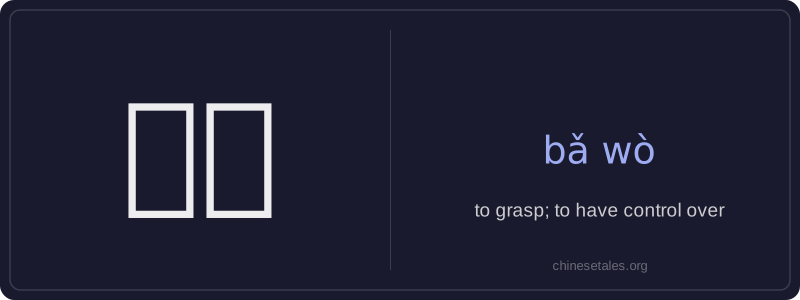
把握 (bǎ wò) literally combines 把 (bǎ), meaning 'to hold' or 'to take', and 握 (wò), meaning 'to grip' or 'to clasp'. Together, they form a verb expressing the idea of mentally or practically grasping something — not just physically holding it, but understanding, controlling, or seizing an opportunity, situation, or feeling. It often implies agency, confidence, and active engagement.
This word is commonly used in abstract contexts: mastering a skill (把握时机 'seize the right moment'), gaining insight into emotions or relationships (把握心情 'understand one’s mood'), or maintaining control over a complex process (把握全局 'grasp the overall situation'). While it can appear in formal writing and speech, it’s also frequent in everyday conversation when discussing decision-making, self-awareness, or strategic thinking. It carries a slightly serious, thoughtful tone — rarely used for trivial matters.
Example Sentences
Related Words
见面
见面 literally means 'see face' — combining 见 (t
背后
背后 literally means 'back + behind' and functions
我的
我的 (wǒ de) is a possessive pronoun meaning 'my'
中学
'Zhōngxué' literally combines 'zhōng' (middle)
面条
‘面条’ (miàn tiáo) literally means ‘flour str
后来
Later (hòulái) is an adverb meaning 'afterwards'
在家
'Zài jiā' literally combines the preposition 'z
不对
不对 (bù duì) literally combines 不 (bù), meani