Word Explanation
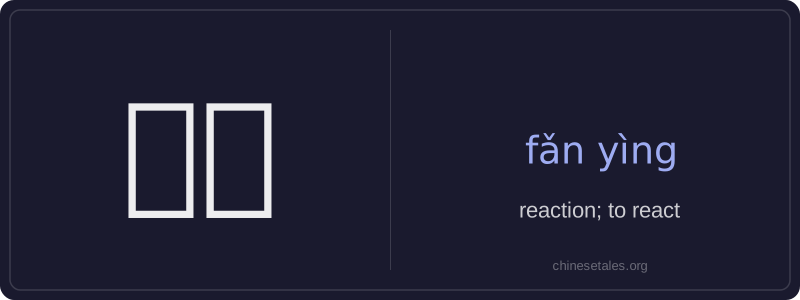
‘反应’ (fǎn yìng) literally combines ‘反’ (fǎn), meaning ‘to reverse’ or ‘against’, and ‘应’ (yìng), meaning ‘to respond’ or ‘to answer’. Together, they form a word that describes a response—either physical, chemical, emotional, or behavioral—to a stimulus. As a noun, it refers to the response itself (e.g., an allergic reaction); as a verb, it means ‘to react’ (e.g., ‘He reacted quickly’). It’s widely used in medical, scientific, psychological, and everyday contexts.
The word is neutral in register and appears frequently in both spoken and written Chinese. It often follows verbs like ‘有’ (yǒu, ‘to have’) or ‘产生’ (chǎnshēng, ‘to produce’) when used as a noun, and takes subject–verb–object structure when used as a verb. Unlike English ‘reaction’, which can imply negativity, ‘反应’ is context-dependent—it can be positive, negative, or neutral (e.g., a favorable reaction to news).
Example Sentences
Related Words
见面
见面 literally means 'see face' — combining 见 (t
背后
背后 literally means 'back + behind' and functions
我的
我的 (wǒ de) is a possessive pronoun meaning 'my'
中学
'Zhōngxué' literally combines 'zhōng' (middle)
面条
‘面条’ (miàn tiáo) literally means ‘flour str
后来
Later (hòulái) is an adverb meaning 'afterwards'
在家
'Zài jiā' literally combines the preposition 'z
不对
不对 (bù duì) literally combines 不 (bù), meani