Word Explanation
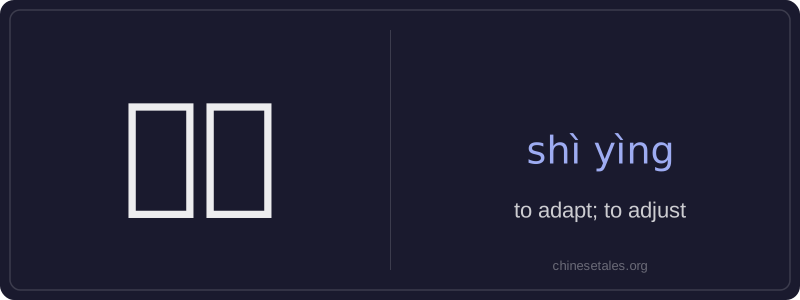
适应 (shì yìng) is a verb meaning 'to adapt' or 'to adjust' — especially to new, changed, or challenging conditions. The first character 适 (shì) means 'suitable' or 'fitting', and the second 应 (yìng) means 'to respond' or 'to comply'. Together, they convey the idea of actively responding in a way that makes one fit or suitable for a new environment or situation. It’s commonly used in contexts involving biological adaptation, social adjustment, learning new routines, or coping with change.
This word often appears in formal or semi-formal registers — in science textbooks (e.g., animal behavior), workplace training materials, or discussions about immigration, education, or health recovery. While it can be used reflexively (e.g., 他需要时间适应), it’s rarely used as a noun; instead, the noun form is 适应性 (shì yìng xìng, 'adaptability'). It implies conscious or physiological effort, not passive acceptance.
Example Sentences
Related Words
见面
见面 literally means 'see face' — combining 见 (t
背后
背后 literally means 'back + behind' and functions
我的
我的 (wǒ de) is a possessive pronoun meaning 'my'
中学
'Zhōngxué' literally combines 'zhōng' (middle)
面条
‘面条’ (miàn tiáo) literally means ‘flour str
后来
Later (hòulái) is an adverb meaning 'afterwards'
在家
'Zài jiā' literally combines the preposition 'z
不对
不对 (bù duì) literally combines 不 (bù), meani