Word Explanation
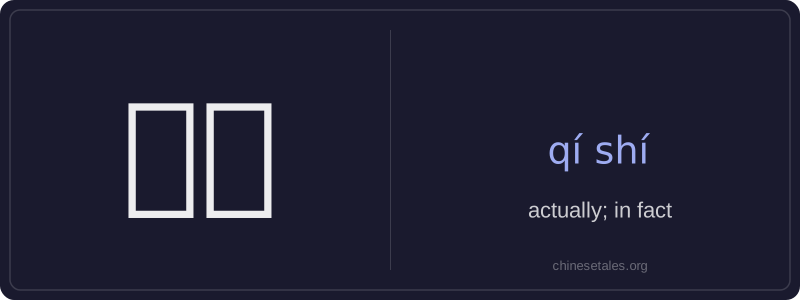
其实 (qí shí) is an adverb meaning 'actually' or 'in fact'. It’s used to introduce a statement that corrects, clarifies, or contrasts with what was previously assumed, said, or implied — often softening a contradiction or revealing a surprising truth. The character 其 (qí) is a classical pronoun meaning 'its', 'his', or 'that', and 实 (shí) means 'real', 'true', or 'substance'; together, they literally convey 'that reality', evolving into a discourse marker for factual correction.
This word frequently appears at the beginning of a sentence or clause, especially in spoken Chinese, to gently qualify or revise earlier information — for example, after someone makes an assumption, you might say 其实… to reveal the actual situation. It carries a neutral-to-polite tone and is widely appropriate in both casual and formal contexts, though it’s more common in speech than formal writing.
Example Sentences
Related Words
见面
见面 literally means 'see face' — combining 见 (t
背后
背后 literally means 'back + behind' and functions
我的
我的 (wǒ de) is a possessive pronoun meaning 'my'
中学
'Zhōngxué' literally combines 'zhōng' (middle)
面条
‘面条’ (miàn tiáo) literally means ‘flour str
后来
Later (hòulái) is an adverb meaning 'afterwards'
在家
'Zài jiā' literally combines the preposition 'z
不对
不对 (bù duì) literally combines 不 (bù), meani