Word Explanation
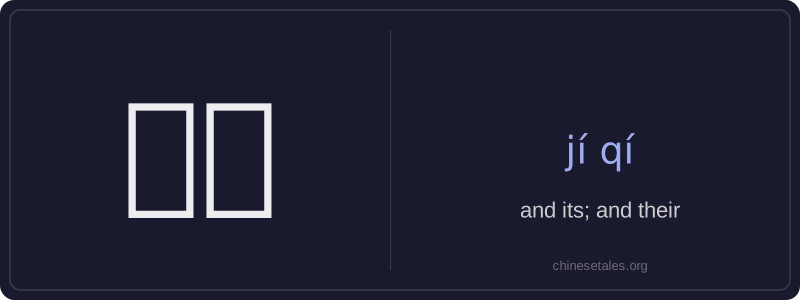
及及其 is a formal written conjunction meaning 'and its' or 'and their', used to link a noun (often an animal, plant, or abstract concept) with its associated attributes, parts, or related entities. The character 及 means 'and' or 'as well as', while 其 is a third-person possessive pronoun ('its', 'his', 'her', or 'their') — together they form a compact, elegant phrase common in academic, legal, and descriptive texts. It is rarely used in casual speech and appears most frequently in contexts involving classification, taxonomy, or systematic description.
This phrase typically follows a noun and introduces something closely associated with it — for example, a species and its habitat, a creature and its behavior, or a phenomenon and its causes. It carries a tone of precision and objectivity, making it especially common in scientific writing, nature documentaries, and official reports about wildlife or ecology. Learners should note that 及其 is not interchangeable with simple 'and' (和) or 'with' (跟), as it specifically signals possession or intrinsic relationship.
Example Sentences
Related Words
见面
见面 literally means 'see face' — combining 见 (t
背后
背后 literally means 'back + behind' and functions
我的
我的 (wǒ de) is a possessive pronoun meaning 'my'
中学
'Zhōngxué' literally combines 'zhōng' (middle)
面条
‘面条’ (miàn tiáo) literally means ‘flour str
后来
Later (hòulái) is an adverb meaning 'afterwards'
在家
'Zài jiā' literally combines the preposition 'z
不对
不对 (bù duì) literally combines 不 (bù), meani