Word Explanation
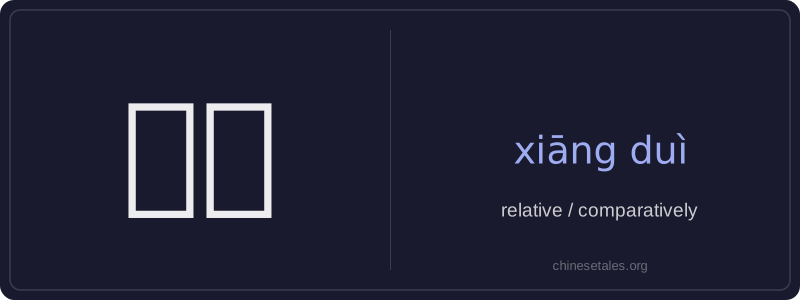
'相对' (xiāng duì) literally combines '相' (mutual, reciprocal) and '对' (to face, to correspond), conveying the idea of 'in relation to something else' or 'by comparison'. It functions primarily as an adjective meaning 'relative'—as opposed to absolute—and as an adverb meaning 'comparatively' or 'relatively'. It’s commonly used in academic, scientific, economic, and everyday contexts to express measured comparison: e.g., relative speed, relative cost, or relatively high/low values.
The word often appears before nouns ('相对优势' — relative advantage) or after verbs/adjectives with '地' when adverbial ('相对稳定地增长' — grow relatively steadily). Unlike standalone adverbs like '比较', '相对' carries a more formal, precise nuance and frequently implies a baseline or reference point is implied or previously stated. It rarely stands alone and almost always modifies another word or phrase.
Example Sentences
Related Words
见面
见面 literally means 'see face' — combining 见 (t
背后
背后 literally means 'back + behind' and functions
我的
我的 (wǒ de) is a possessive pronoun meaning 'my'
中学
'Zhōngxué' literally combines 'zhōng' (middle)
面条
‘面条’ (miàn tiáo) literally means ‘flour str
后来
Later (hòulái) is an adverb meaning 'afterwards'
在家
'Zài jiā' literally combines the preposition 'z
不对
不对 (bù duì) literally combines 不 (bù), meani