Word Explanation
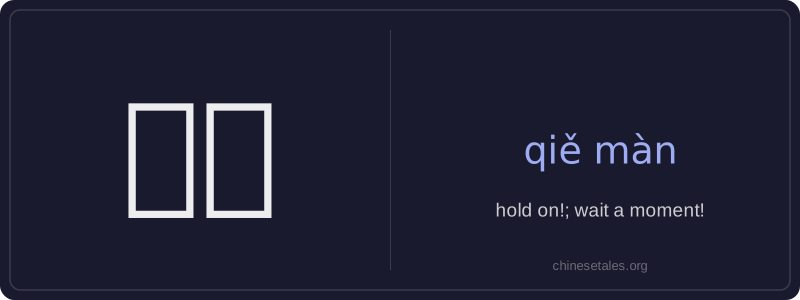
'Qiě màn' is an interjection used to politely but firmly ask someone to pause or hold off before taking action. Literally, 'qiě' means 'yet' or 'still', and 'màn' means 'slow' or 'slow down'; together they form a concise, idiomatic phrase urging temporary suspension—like saying 'hold on!' or 'wait a moment!' in English. It carries a tone of gentle authority or timely caution, often used when someone is about to make a hasty decision, speak out of turn, or act prematurely.
This expression is common in spoken Mandarin, especially in formal or semi-formal interactions—such as customer service, classroom settings, or workplace discussions. While it can sound slightly literary or old-fashioned in very casual speech, it remains widely understood and appreciated for its clarity and politeness. It’s rarely used in writing except in dialogue or dramatic contexts, and it always stands alone or begins a sentence—not as a modifier or verb complement.
Example Sentences
Related Words
见面
见面 literally means 'see face' — combining 见 (t
背后
背后 literally means 'back + behind' and functions
我的
我的 (wǒ de) is a possessive pronoun meaning 'my'
中学
'Zhōngxué' literally combines 'zhōng' (middle)
面条
‘面条’ (miàn tiáo) literally means ‘flour str
后来
Later (hòulái) is an adverb meaning 'afterwards'
在家
'Zài jiā' literally combines the preposition 'z
不对
不对 (bù duì) literally combines 不 (bù), meani