Word Explanation
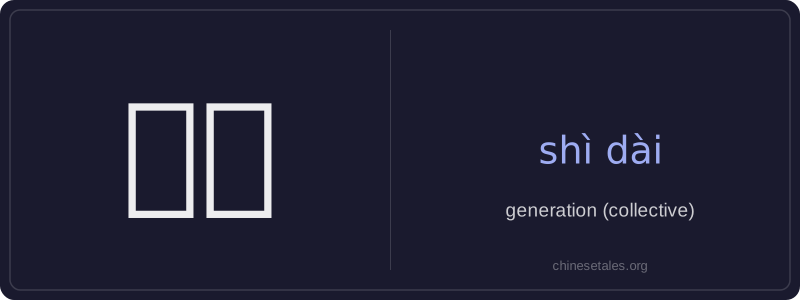
‘世代’ (shì dài) is a compound noun meaning ‘generation’—specifically, a collective group of people born and living around the same time, often within a family or society. The first character 世 (shì) originally meant ‘world’ or ‘age’, and carries connotations of a long span of time or era; the second character 代 (dài) means ‘generation’ or ‘era’ in the sense of a temporal succession. Together, they emphasize continuity across time—especially lineage, cultural inheritance, or historical periods—not just biological age cohorts.
This term is commonly used in formal, literary, or descriptive contexts: when discussing family history (e.g., ‘three generations’), societal change (e.g., ‘a new generation of leaders’), or enduring traditions passed down over time. It’s more abstract and weighty than the simpler word 代 (dài) alone, and rarely refers to individuals—it always implies a group sharing temporal and often relational ties. You’ll see it in news reports, historical writing, and discussions about cultural preservation or intergenerational dynamics.
Example Sentences
Related Words
见面
见面 literally means 'see face' — combining 见 (t
背后
背后 literally means 'back + behind' and functions
我的
我的 (wǒ de) is a possessive pronoun meaning 'my'
中学
'Zhōngxué' literally combines 'zhōng' (middle)
面条
‘面条’ (miàn tiáo) literally means ‘flour str
后来
Later (hòulái) is an adverb meaning 'afterwards'
在家
'Zài jiā' literally combines the preposition 'z
不对
不对 (bù duì) literally combines 不 (bù), meani