Word Explanation
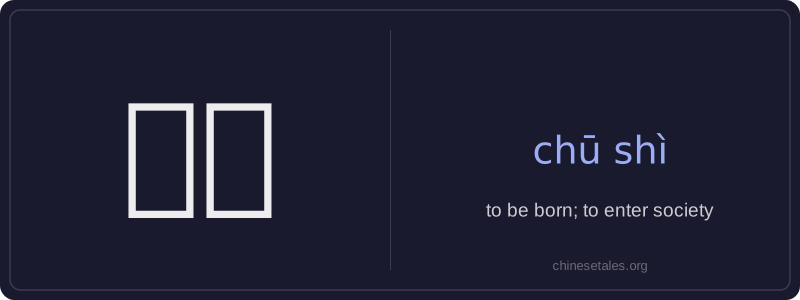
出世 (chū shì) literally combines 出 (‘to go out, emerge’) and 世 (‘world, society’), so its core meaning is ‘to emerge into the world’ — i.e., to be born. It’s commonly used for humans and animals alike, especially in formal, literary, or narrative contexts (e.g., biographies, news reports about newborns, or descriptions of rare animal births). Unlike the more colloquial 生 (shēng), 出世 carries a slightly elevated or poetic tone.
The word can also mean ‘to enter society’ in extended usage — for example, when referring to a person’s debut in public life, such as an artist’s first major exhibition or a company’s launch. In this sense, it emphasizes emergence into a broader social or professional sphere. While both meanings share the idea of entry or appearance, the birth sense is far more frequent in everyday language.
Example Sentences
Related Words
见面
见面 literally means 'see face' — combining 见 (t
背后
背后 literally means 'back + behind' and functions
我的
我的 (wǒ de) is a possessive pronoun meaning 'my'
中学
'Zhōngxué' literally combines 'zhōng' (middle)
面条
‘面条’ (miàn tiáo) literally means ‘flour str
后来
Later (hòulái) is an adverb meaning 'afterwards'
在家
'Zài jiā' literally combines the preposition 'z
不对
不对 (bù duì) literally combines 不 (bù), meani