Word Explanation
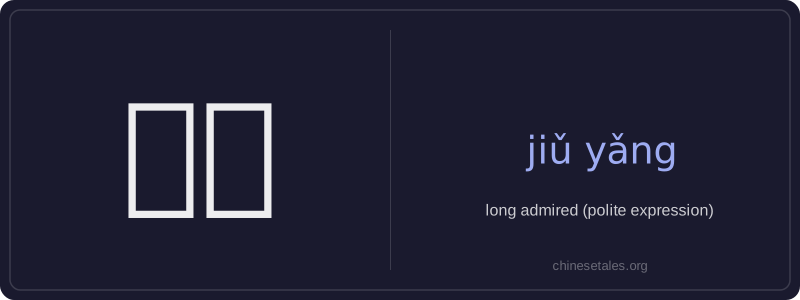
‘久仰’ is a formal, respectful interjection used when meeting someone for the first time after having heard of them for a long time. Literally, 久 (jiǔ) means ‘long’ or ‘for a long time’, and 仰 (yǎng) means ‘to admire’ or ‘to look up to’ — together they convey ‘I have long admired you’. It reflects traditional Chinese values of humility and respect, especially toward people with accomplishments, seniority, or reputation.
This phrase is never used in casual conversation among peers or friends; it belongs strictly to polite, often slightly ceremonial contexts — such as introductions at academic conferences, business meetings with distinguished guests, or meeting a renowned teacher or artist. It’s typically followed by a bow or handshake, and often paired with phrases like ‘久仰大名’ (jiǔ yǎng dà míng, ‘long admired your great name’) to heighten formality. While grammatically it functions like an interjection, it carries strong pragmatic weight — signaling deference and sincere recognition.
Example Sentences
Related Words
见面
见面 literally means 'see face' — combining 见 (t
背后
背后 literally means 'back + behind' and functions
我的
我的 (wǒ de) is a possessive pronoun meaning 'my'
中学
'Zhōngxué' literally combines 'zhōng' (middle)
面条
‘面条’ (miàn tiáo) literally means ‘flour str
后来
Later (hòulái) is an adverb meaning 'afterwards'
在家
'Zài jiā' literally combines the preposition 'z
不对
不对 (bù duì) literally combines 不 (bù), meani