Word Explanation
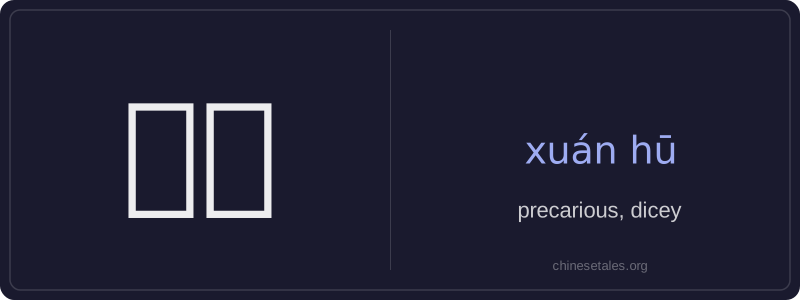
悬乎 (xuán hū) is an informal, colloquial adjective meaning 'precarious,' 'dicey,' or 'uncertain'—often describing a situation that feels unstable, risky, or likely to fail. The character 悬 literally means 'to hang' and evokes the image of something dangling in midair with no support; 乎 is a classical particle that adds a sense of doubt or vagueness. Together, they convey the feeling of being suspended between outcomes—neither safe nor secure.
This term is commonly used in spoken Mandarin to express anxiety or skepticism about results: a job interview outcome, a medical diagnosis, a sports match, or even whether dinner will be ready on time. It carries mild emotional weight—suggesting worry but not panic—and often appears in conversational contexts after verbs like 看起来 (it looks), 觉得 (I feel), or 听起来 (it sounds).
Example Sentences
Related Words
见面
见面 literally means 'see face' — combining 见 (t
背后
背后 literally means 'back + behind' and functions
我的
我的 (wǒ de) is a possessive pronoun meaning 'my'
中学
'Zhōngxué' literally combines 'zhōng' (middle)
面条
‘面条’ (miàn tiáo) literally means ‘flour str
后来
Later (hòulái) is an adverb meaning 'afterwards'
在家
'Zài jiā' literally combines the preposition 'z
不对
不对 (bù duì) literally combines 不 (bù), meani