Word Explanation
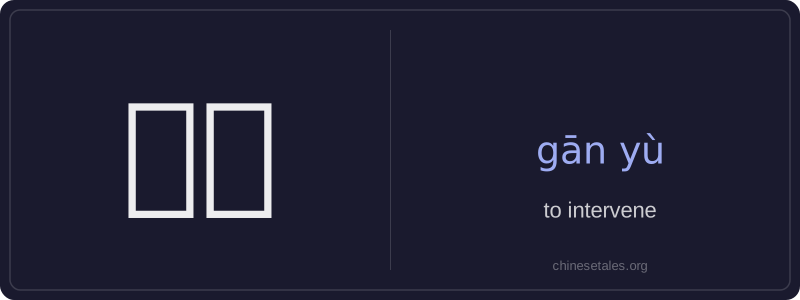
干预 (gān yù) is a verb meaning 'to intervene' — that is, to step in and act in a situation, often to influence, stop, or change its course. The first character 干 (gān) means 'to do' or 'to handle', while 预 (yù) means 'in advance' or 'to anticipate'; together, they convey the idea of acting proactively before a situation escalates or becomes unmanageable. It carries a formal, sometimes official or authoritative tone, commonly used in contexts like medicine, politics, education, or social welfare.
This word frequently appears in discussions about external involvement — for example, when governments regulate industries, doctors adjust treatment plans, or parents step into their child’s academic decisions. It implies purposeful, deliberate action, not casual interference. Unlike the more neutral 介入 (jiè rù), 干预 often suggests a degree of authority or responsibility, and may sometimes carry a slightly negative connotation if the intervention is unwelcome or overreaching.
Example Sentences
Related Words
见面
见面 literally means 'see face' — combining 见 (t
背后
背后 literally means 'back + behind' and functions
我的
我的 (wǒ de) is a possessive pronoun meaning 'my'
中学
'Zhōngxué' literally combines 'zhōng' (middle)
面条
‘面条’ (miàn tiáo) literally means ‘flour str
后来
Later (hòulái) is an adverb meaning 'afterwards'
在家
'Zài jiā' literally combines the preposition 'z
不对
不对 (bù duì) literally combines 不 (bù), meani