Word Explanation
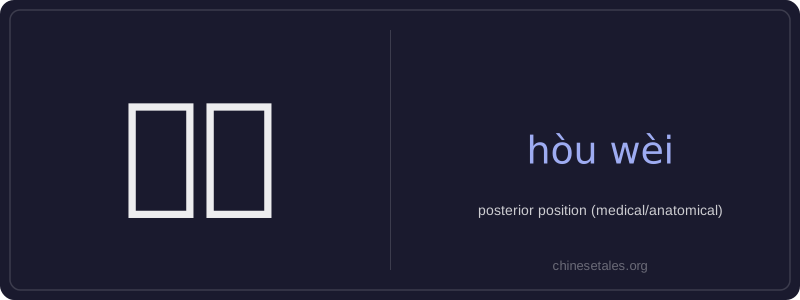
‘后位’ (hòu wèi) is a medical and anatomical term meaning 'posterior position' — that is, a location toward the back of the body relative to another structure or the body’s midline. The first character 后 (hòu) means 'behind' or 'back', while 位 (wèi) means 'position', 'place', or 'location'. Together, they form a compound noun used primarily in clinical contexts to describe spatial relationships within the human body — for example, when describing the placement of an organ, a lesion, or a fetal presentation during pregnancy.
This term appears frequently in radiology reports, gynecological assessments, and surgical notes. It contrasts with terms like 前位 (qián wèi, 'anterior position') and 中位 (zhōng wèi, 'mid-position'). Unlike everyday directional words such as 后面 (hòu miàn, 'behind'), 后位 is technical, formal, and rarely used outside healthcare settings. Learners should note it is always a noun and never functions as an adjective or adverb without modification (e.g., 后位的 is possible but uncommon and requires careful context).
Example Sentences
Related Words
见面
见面 literally means 'see face' — combining 见 (t
背后
背后 literally means 'back + behind' and functions
我的
我的 (wǒ de) is a possessive pronoun meaning 'my'
中学
'Zhōngxué' literally combines 'zhōng' (middle)
面条
‘面条’ (miàn tiáo) literally means ‘flour str
后来
Later (hòulái) is an adverb meaning 'afterwards'
在家
'Zài jiā' literally combines the preposition 'z
不对
不对 (bù duì) literally combines 不 (bù), meani