Word Explanation
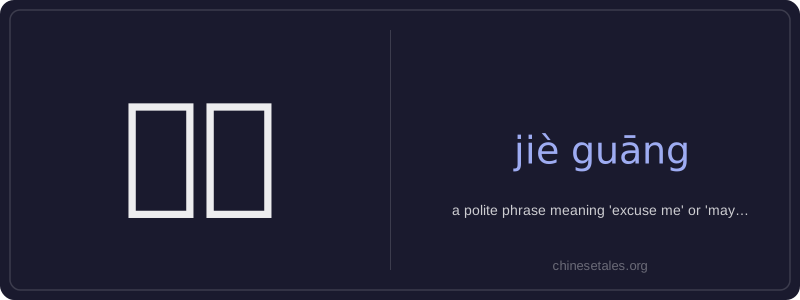
'Jiè guāng' is a traditional, highly polite interjection used primarily to request passage in crowded or confined spaces — such as squeezing past someone on a bus, stepping around a person in a narrow hallway, or moving ahead in a queue. Literally, the phrase means 'borrow light': historically, it evokes the image of asking to borrow the 'light' (space, visibility, or path) in front of someone, implying humility and respect rather than imposing on them.
Though it contains two nouns, 借光 functions idiomatically as a fixed expression and is never broken apart or modified grammatically. It's commonly heard in informal yet courteous daily interactions, especially in northern China, and carries warm, slightly old-fashioned charm. Unlike direct phrases like 'duì bu qǐ' (excuse me), 借光 conveys deference without apology — it’s about requesting permission to move, not expressing regret for inconvenience.
Example Sentences
Related Words
见面
见面 literally means 'see face' — combining 见 (t
背后
背后 literally means 'back + behind' and functions
我的
我的 (wǒ de) is a possessive pronoun meaning 'my'
中学
'Zhōngxué' literally combines 'zhōng' (middle)
面条
‘面条’ (miàn tiáo) literally means ‘flour str
后来
Later (hòulái) is an adverb meaning 'afterwards'
在家
'Zài jiā' literally combines the preposition 'z
不对
不对 (bù duì) literally combines 不 (bù), meani