Word Explanation
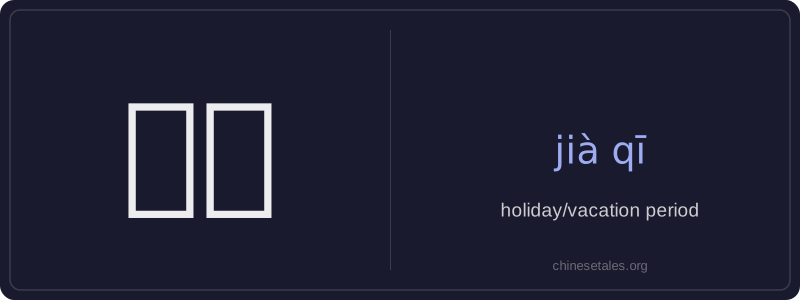
‘假期’ (jià qī) is a noun meaning 'holiday' or 'vacation period'—a stretch of time officially or socially set aside for rest, travel, or leisure. The first character 假 (jià) means 'leave' or 'time off' (distinct from the homophone jiǎ meaning 'false'), while 期 (qī) means 'period' or 'duration'. Together, they form a compound that emphasizes the temporal nature of the break—not just a single day, but an extended span such as summer vacation, National Day holiday, or winter break.
This word is commonly used in formal and informal contexts: schools announce '寒假假期' (winter vacation period), companies refer to '年假假期' (annual leave period), and people plan trips '在假期里' (during the holiday). It’s neutral in register and works for both public holidays and personal time off—unlike '假日' (jià rì), which often refers to specific holiday days rather than multi-day stretches.
Example Sentences
Related Words
见面
见面 literally means 'see face' — combining 见 (t
背后
背后 literally means 'back + behind' and functions
我的
我的 (wǒ de) is a possessive pronoun meaning 'my'
中学
'Zhōngxué' literally combines 'zhōng' (middle)
面条
‘面条’ (miàn tiáo) literally means ‘flour str
后来
Later (hòulái) is an adverb meaning 'afterwards'
在家
'Zài jiā' literally combines the preposition 'z
不对
不对 (bù duì) literally combines 不 (bù), meani