Word Explanation
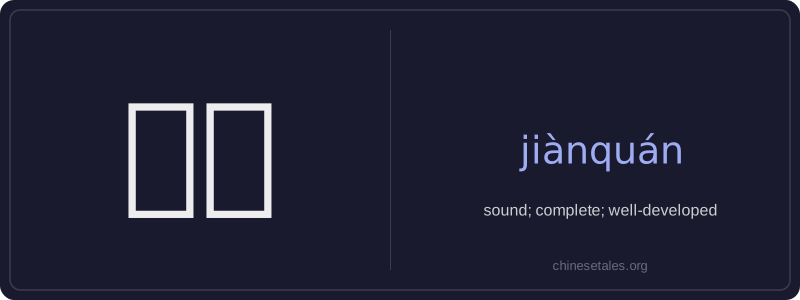
健全 (jiànquán) is an adjective meaning 'sound', 'complete', or 'well-developed', especially when describing systems, institutions, bodies, or abilities that function properly and without deficiency. The first character 健 means 'healthy' or 'robust', while the second character 全 means 'complete' or 'intact'; together they convey the idea of wholeness combined with strength and proper functioning.
This word is commonly used in formal or written contexts—such as policy documents, health education, legal texts, or social commentary—to describe things like a 'sound legal system', 'a well-developed immune system', or 'a complete set of regulations'. It carries a positive, normative connotation, implying not just physical integrity but also functional adequacy and resilience. While it can occasionally modify nouns directly (e.g., 健全的体制), it often appears in phrases emphasizing development, improvement, or maintenance (e.g., 建立健全… 'to establish and improve…').
Example Sentences
Related Words
见面
见面 literally means 'see face' — combining 见 (t
背后
背后 literally means 'back + behind' and functions
我的
我的 (wǒ de) is a possessive pronoun meaning 'my'
中学
'Zhōngxué' literally combines 'zhōng' (middle)
面条
‘面条’ (miàn tiáo) literally means ‘flour str
后来
Later (hòulái) is an adverb meaning 'afterwards'
在家
'Zài jiā' literally combines the preposition 'z
不对
不对 (bù duì) literally combines 不 (bù), meani