Word Explanation
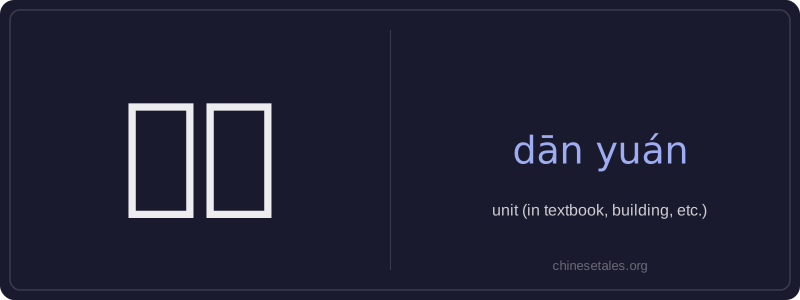
单元 (dān yuán) literally combines 单 (dān), meaning 'single' or 'individual', and 元 (yuán), meaning 'element', 'origin', or 'unit'. Together, they form a noun meaning 'unit'—a self-contained section or component within a larger structure. It is most commonly used in educational contexts to refer to a chapter or lesson unit in a textbook, such as 'Unit 3 of the Chinese language course'. It also appears in architecture and real estate to denote an apartment or residential unit within a building.
The word carries a sense of structural division: each 单元 has defined boundaries and internal coherence. Unlike the more general term 部分 (bùfèn, 'part'), 单元 implies intentional design, standardization, and functional independence—whether it's a grammar unit in a workbook or a floor plan unit in a high-rise. It is neutral in register and widely used in both formal and everyday speech.
Example Sentences
Related Words
见面
见面 literally means 'see face' — combining 见 (t
背后
背后 literally means 'back + behind' and functions
我的
我的 (wǒ de) is a possessive pronoun meaning 'my'
中学
'Zhōngxué' literally combines 'zhōng' (middle)
面条
‘面条’ (miàn tiáo) literally means ‘flour str
后来
Later (hòulái) is an adverb meaning 'afterwards'
在家
'Zài jiā' literally combines the preposition 'z
不对
不对 (bù duì) literally combines 不 (bù), meani