Word Explanation
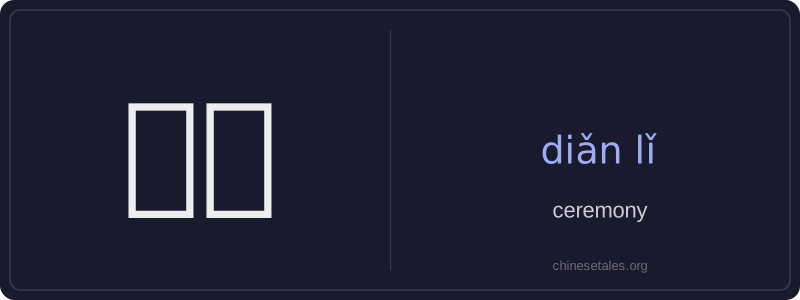
‘典礼’ (diǎn lǐ) is a formal noun meaning 'ceremony' — a solemn, structured event marking an important occasion such as a graduation, wedding, award presentation, or national holiday. The first character 典 (diǎn) means 'classical text', 'canon', or 'model of propriety', suggesting something established, dignified, and authoritative; the second character 礼 (lǐ) means 'ritual', 'etiquette', or 'courtesy', emphasizing proper conduct and respect. Together, 典礼 conveys the idea of a prescribed, respectful ritual grounded in tradition and social significance.
This word is used almost exclusively for official, public, or milestone events — never for casual gatherings. It carries a tone of formality and gravity, so it’s common in news reports, school announcements, and government communications. While 礼 alone can appear in compound words like 礼物 (lǐwù, 'gift') or 礼貌 (lǐmào, 'politeness'), 典礼 is always a standalone noun referring to a full ceremonial event with speeches, processions, or symbolic acts.
Example Sentences
Related Words
见面
见面 literally means 'see face' — combining 见 (t
背后
背后 literally means 'back + behind' and functions
我的
我的 (wǒ de) is a possessive pronoun meaning 'my'
中学
'Zhōngxué' literally combines 'zhōng' (middle)
面条
‘面条’ (miàn tiáo) literally means ‘flour str
后来
Later (hòulái) is an adverb meaning 'afterwards'
在家
'Zài jiā' literally combines the preposition 'z
不对
不对 (bù duì) literally combines 不 (bù), meani