Word Explanation
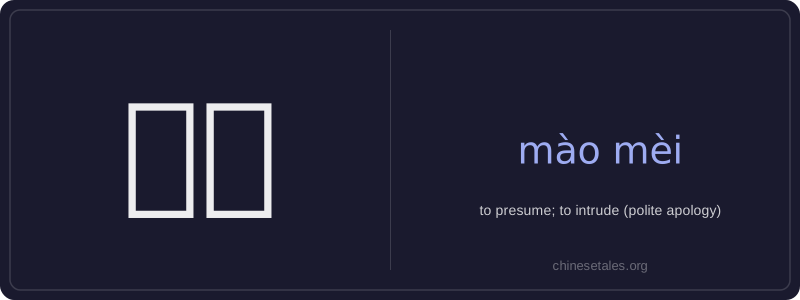
‘冒昧’ is an adverb used to politely preface a request, question, or action that might be considered intrusive, presumptuous, or socially inconvenient. Literally, ‘冒’ (mào) means 'to risk' or 'to venture', and ‘昧’ (mèi) means 'to act without clear knowledge or propriety' — together they convey the sense of 'venturing forward despite uncertainty about whether one’s action is appropriate'. It functions as a humble self-deprecation, softening potential social friction.
This expression is common in formal written communication (e.g., emails, letters) and polite spoken interactions, especially when addressing superiors, elders, or strangers. It often appears at the beginning of a sentence before verbs like 问 (to ask), 打扰 (to disturb), 提出 (to propose), or 联系 (to contact). While it sounds deferential, overuse in casual settings may seem overly stiff or insincere — native speakers reserve it for situations where genuine respect or caution is warranted.
Example Sentences
Related Words
见面
见面 literally means 'see face' — combining 见 (t
背后
背后 literally means 'back + behind' and functions
我的
我的 (wǒ de) is a possessive pronoun meaning 'my'
中学
'Zhōngxué' literally combines 'zhōng' (middle)
面条
‘面条’ (miàn tiáo) literally means ‘flour str
后来
Later (hòulái) is an adverb meaning 'afterwards'
在家
'Zài jiā' literally combines the preposition 'z
不对
不对 (bù duì) literally combines 不 (bù), meani