Word Explanation
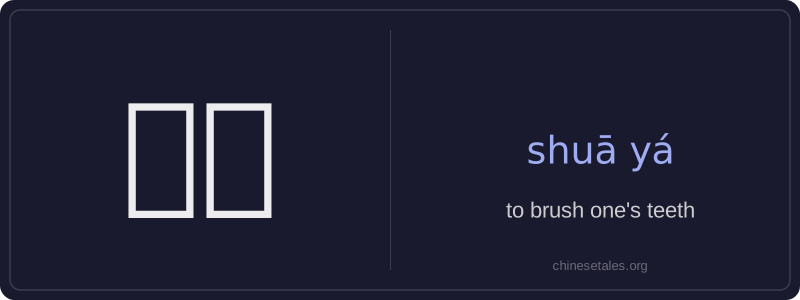
刷牙 (shuā yá) literally means 'to brush teeth' — 刷 (shuā) means 'to brush, scrub, or wipe', and 牙 (yá) means 'tooth' or 'teeth'. Together, they form a common verb phrase describing the daily hygiene activity of cleaning one’s teeth with a toothbrush and toothpaste. It is an essential part of personal care in Chinese-speaking cultures and is frequently taught to children from an early age.
This verb is typically used in the context of routines, health education, and family life. It commonly appears with time expressions (e.g., 早上、睡前), aspect particles (e.g., 了, 过, 正在), or as part of instructions ('Remember to brush your teeth!'). While it can appear as a noun in limited contexts (e.g., 刷牙时间 — 'tooth-brushing time'), its primary and overwhelmingly dominant usage is verbal.
Example Sentences
Related Words
见面
见面 literally means 'see face' — combining 见 (t
背后
背后 literally means 'back + behind' and functions
我的
我的 (wǒ de) is a possessive pronoun meaning 'my'
中学
'Zhōngxué' literally combines 'zhōng' (middle)
面条
‘面条’ (miàn tiáo) literally means ‘flour str
后来
Later (hòulái) is an adverb meaning 'afterwards'
在家
'Zài jiā' literally combines the preposition 'z
不对
不对 (bù duì) literally combines 不 (bù), meani