Word Explanation
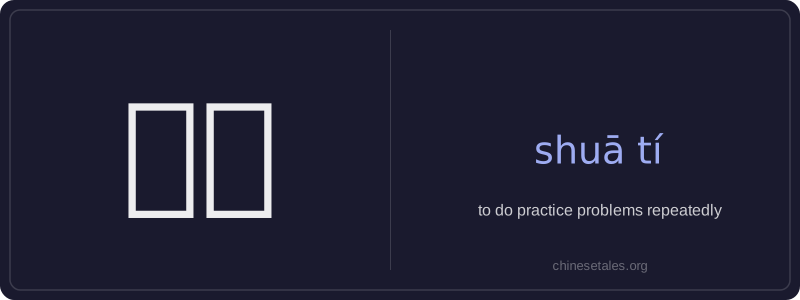
'Shuā tí' literally combines 刷 (shuā), meaning 'to brush' or 'to swipe,' and 题 (tí), meaning 'problem' or 'question.' Figuratively, it describes the repetitive, often intensive practice of solving exam-style problems—especially in preparation for standardized tests like the Gaokao, CET, or math competitions. The verb conveys a sense of speed, volume, and mechanical repetition, much like 'swiping through' questions.
This term is widely used among students, tutors, and education-focused media in China. It carries neutral-to-slightly-ironic connotations: while it reflects diligence and strategic preparation, it can also imply rote learning without deep conceptual understanding. You’ll hear it in contexts like after-school tutoring, online learning platforms, and study group discussions—not in formal academic writing, but very commonly in casual and semi-formal spoken and written Chinese.
Example Sentences
Related Words
见面
见面 literally means 'see face' — combining 见 (t
背后
背后 literally means 'back + behind' and functions
我的
我的 (wǒ de) is a possessive pronoun meaning 'my'
中学
'Zhōngxué' literally combines 'zhōng' (middle)
面条
‘面条’ (miàn tiáo) literally means ‘flour str
后来
Later (hòulái) is an adverb meaning 'afterwards'
在家
'Zài jiā' literally combines the preposition 'z
不对
不对 (bù duì) literally combines 不 (bù), meani