Word Explanation
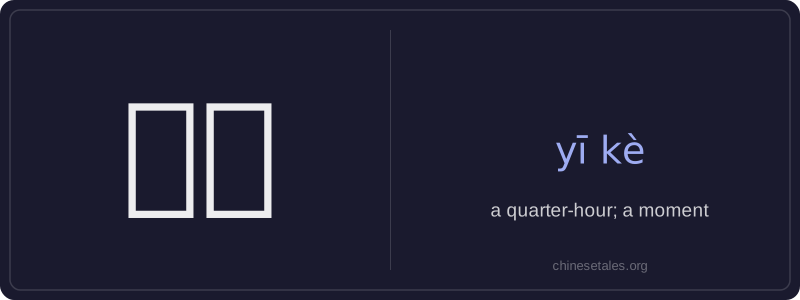
‘一刻’ literally combines ‘一’ (yī, meaning 'one') and ‘刻’ (kè, an ancient Chinese unit of time equal to 15 minutes). Historically, a day was divided into 96 ke, each lasting 15 minutes—hence ‘一刻’ means exactly a quarter-hour. It is still used today in both precise time-telling and figurative expressions.
In modern Mandarin, ‘一刻’ functions as a noun meaning either the literal 15-minute interval or, more commonly, a brief, indeterminate moment—similar to 'an instant' or 'a split second'. Unlike ‘一分钟’ (one minute), ‘一刻’ carries a slightly literary or emphatic tone, especially in set phrases like ‘一刻也不能耽误’ (not a moment can be delayed). It rarely appears in casual speech on its own for time-telling; instead, it’s embedded in fixed expressions or formal contexts.
Example Sentences
Related Words
背后
背后 literally means 'back + behind' and functions
见面
见面 literally means 'see face' — combining 见 (t
我的
我的 (wǒ de) is a possessive pronoun meaning 'my'
中学
'Zhōngxué' literally combines 'zhōng' (middle)
面条
‘面条’ (miàn tiáo) literally means ‘flour str
后来
Later (hòulái) is an adverb meaning 'afterwards'
在家
'Zài jiā' literally combines the preposition 'z
不对
不对 (bù duì) literally combines 不 (bù), meani