Word Explanation
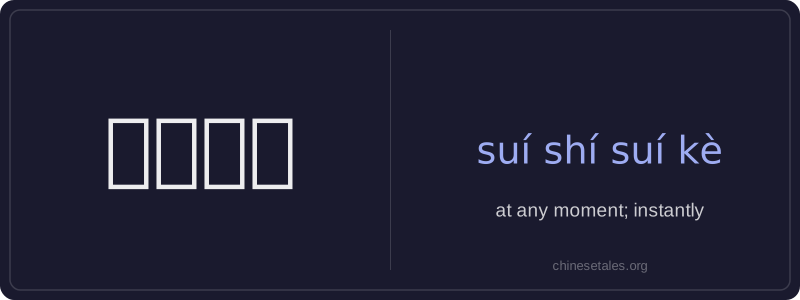
随时随刻 is an adverbial phrase meaning 'at any moment' or 'instantly', emphasizing immediacy and constant readiness. Literally, it repeats 随 (‘to follow’ or ‘according to’) with two time-related nouns: 时 (‘time’, often referring to broader timeframes like hours or occasions) and 刻 (‘moment’, a more precise, fleeting unit — historically one of 96 divisions of a day). The reduplication (随 + 时 + 随 + 刻) strengthens the sense of uninterrupted availability or responsiveness across all temporal scales.
This phrase is commonly used in formal or semi-formal contexts — such as customer service promises, emergency protocols, or digital platform features — to convey unwavering accessibility. It’s more emphatic and slightly more literary than simpler alternatives like 随时 or 随地, and it carries a tone of reliability and urgency. While grammatically flexible, it most frequently modifies verbs indicating action, response, or availability (e.g., 联系, 响应, 准备).
Example Sentences
Related Words
背后
背后 literally means 'back + behind' and functions
见面
见面 literally means 'see face' — combining 见 (t
我的
我的 (wǒ de) is a possessive pronoun meaning 'my'
中学
'Zhōngxué' literally combines 'zhōng' (middle)
面条
‘面条’ (miàn tiáo) literally means ‘flour str
后来
Later (hòulái) is an adverb meaning 'afterwards'
在家
'Zài jiā' literally combines the preposition 'z
不对
不对 (bù duì) literally combines 不 (bù), meani