Word Explanation
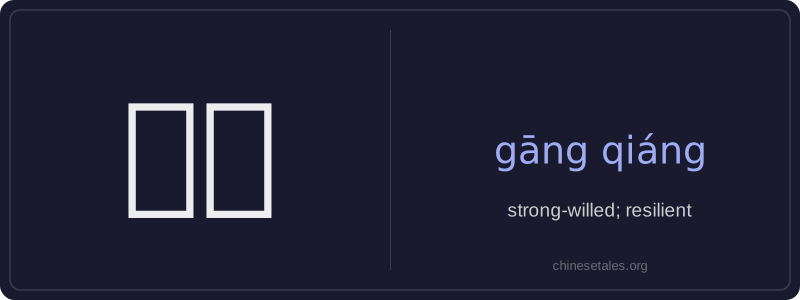
刚强 (gāng qiáng) is an adjective describing inner strength—specifically, a firm, unyielding character that withstands hardship without breaking. The first character 刚 means 'stiff,' 'firm,' or 'unbending,' often implying moral rigidity or resolve; the second, 强, means 'strong' or 'powerful,' emphasizing resilience and endurance. Together, they convey not physical power but psychological fortitude: the ability to remain principled, calm, and determined in adversity.
This word is commonly used to describe people—especially those who face suffering, injustice, or loss with quiet dignity and unwavering conviction. It carries a respectful, slightly formal tone and appears frequently in literature, speeches, and moral discourse. Unlike colloquial terms like 坚强 (jiān qiáng), 刚强 places greater emphasis on moral inflexibility and steadfastness than on emotional recovery or adaptability.
Example Sentences
Related Words
背后
背后 literally means 'back + behind' and functions
见面
见面 literally means 'see face' — combining 见 (t
我的
我的 (wǒ de) is a possessive pronoun meaning 'my'
中学
'Zhōngxué' literally combines 'zhōng' (middle)
面条
‘面条’ (miàn tiáo) literally means ‘flour str
后来
Later (hòulái) is an adverb meaning 'afterwards'
在家
'Zài jiā' literally combines the preposition 'z
不对
不对 (bù duì) literally combines 不 (bù), meani