Word Explanation
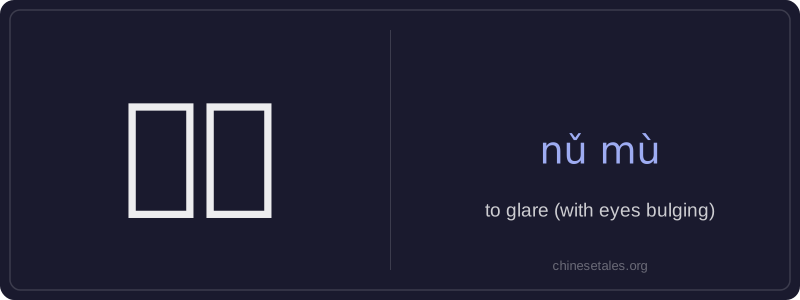
‘努目’ is a vivid, somewhat literary verb meaning ‘to glare’—specifically with eyes wide open and bulging outward, often conveying intense anger, fierce determination, or sharp focus. The character 努 (nǔ) means ‘to exert effort’ or ‘to strain’, while 目 (mù) means ‘eye’; together, they literally suggest ‘straining the eyes’. This compound emphasizes physical intensity in facial expression, not just visual attention.
It appears frequently in classical and modern descriptive writing—especially when portraying characters in heightened emotional states, such as warriors preparing for battle, animals defending territory, or people confronting injustice. Though grammatically a verb, it’s rarely used alone; it typically appears as a complement (e.g., ‘怒目而视’) or in fixed four-character idioms like 怒目圆睁. It carries a strong visual and emotional charge, making it unsuitable for casual or neutral contexts.
Example Sentences
Related Words
背后
背后 literally means 'back + behind' and functions
见面
见面 literally means 'see face' — combining 见 (t
面条
‘面条’ (miàn tiáo) literally means ‘flour str
我的
我的 (wǒ de) is a possessive pronoun meaning 'my'
中学
'Zhōngxué' literally combines 'zhōng' (middle)
后来
Later (hòulái) is an adverb meaning 'afterwards'
在家
'Zài jiā' literally combines the preposition 'z
不对
不对 (bù duì) literally combines 不 (bù), meani