Word Explanation
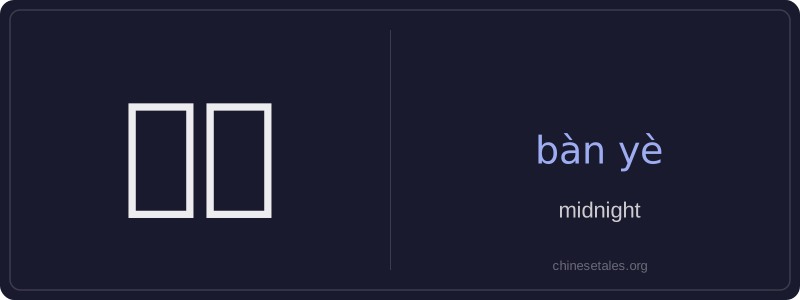
‘半夜’ literally means ‘half night’ and refers to the middle of the night—specifically around midnight (12 a.m.), though it can loosely cover the period from roughly 11 p.m. to 2 a.m. The character 半 (bàn) means ‘half’, and 夜 (yè) means ‘night’; together, they evoke the idea of the night divided in two, with midnight as the turning point. Unlike precise clock times like ‘零点’ (líng diǎn), ‘半夜’ is descriptive and atmospheric—it often implies quiet, solitude, or unexpected events occurring when most people are asleep.
This term is common in storytelling, daily conversation, and expressions describing timing or mood—for example, waking up suddenly, hearing strange noises, or receiving an urgent call. It carries a subtle literary or slightly formal tone compared to colloquial alternatives like ‘大半夜’ (dà bàn yè), which adds emphasis on lateness or inconvenience. ‘半夜’ does not function as an adverb on its own; it typically appears with time markers like ‘在’ (zài) or verbs indicating occurrence or duration.
Example Sentences
Related Words
背后
背后 literally means 'back + behind' and functions
见面
见面 literally means 'see face' — combining 见 (t
面条
‘面条’ (miàn tiáo) literally means ‘flour str
我的
我的 (wǒ de) is a possessive pronoun meaning 'my'
中学
'Zhōngxué' literally combines 'zhōng' (middle)
后来
Later (hòulái) is an adverb meaning 'afterwards'
在家
'Zài jiā' literally combines the preposition 'z
不对
不对 (bù duì) literally combines 不 (bù), meani