Word Explanation
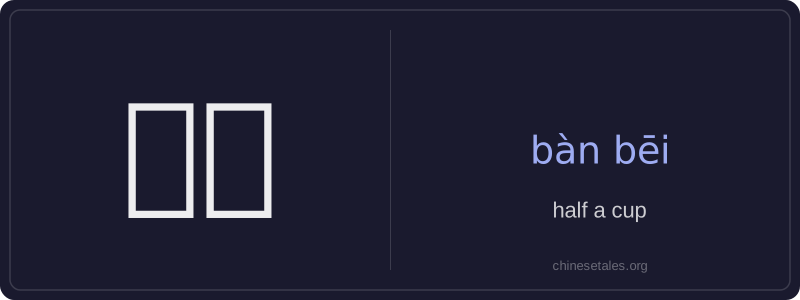
半杯 literally means 'half cup' and functions as a noun phrase indicating exactly one-half of a standard cup’s volume. It combines the numeral 半 (bàn), meaning 'half', with the measure word and noun 杯 (bēi), meaning 'cup'—here used both as a physical container and as a unit of volume, especially for liquids like water, coffee, or milk. Unlike English, where 'half a cup' often implies an approximate quantity, 半杯 in Chinese is typically precise and context-dependent: it assumes a known reference cup size, commonly 200–250 mL in daily usage.
This phrase frequently appears in cooking instructions, health advice, beverage orders, and casual conversation about portion sizes. It’s always used with classifiers or verbs that take noun phrases—never standalone as a verb or adjective. While 半杯 can modify nouns (e.g., 半杯水), it most often stands alone as the subject or object of a sentence. It carries no formality register—it’s neutral and widely appropriate across spoken and written contexts.
Example Sentences
Related Words
背后
背后 literally means 'back + behind' and functions
见面
见面 literally means 'see face' — combining 见 (t
面条
‘面条’ (miàn tiáo) literally means ‘flour str
我的
我的 (wǒ de) is a possessive pronoun meaning 'my'
中学
'Zhōngxué' literally combines 'zhōng' (middle)
后来
Later (hòulái) is an adverb meaning 'afterwards'
在家
'Zài jiā' literally combines the preposition 'z
不对
不对 (bù duì) literally combines 不 (bù), meani