Word Explanation
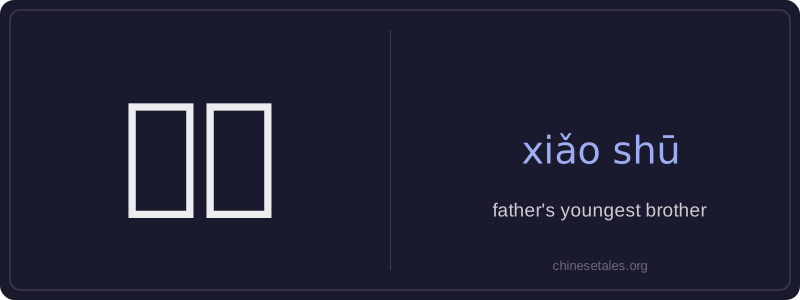
‘Xiǎo shū’ literally combines ‘xiǎo’ (small, younger) and ‘shū’ (father’s brother), meaning specifically the youngest of one’s father’s brothers. Unlike the general term ‘shūshu’ (uncle), which can refer to any paternal uncle, ‘xiǎo shū’ emphasizes birth order — it is used only when the father has more than one brother and this particular uncle is the youngest. The term reflects Chinese kinship’s precise hierarchical and age-based distinctions.
This word is commonly used in family conversations, formal introductions, or written contexts like letters and family trees. It carries a respectful yet affectionate tone, especially when spoken by children or younger relatives. In daily life, you might hear it when asking about relatives’ whereabouts, giving gifts during holidays, or referring to someone’s role in family gatherings. It is not used for maternal uncles (who are called ‘jiùjiu’) or for brothers-in-law — those require entirely different terms.
Example Sentences
Related Words
背后
背后 literally means 'back + behind' and functions
见面
见面 literally means 'see face' — combining 见 (t
面条
‘面条’ (miàn tiáo) literally means ‘flour str
我的
我的 (wǒ de) is a possessive pronoun meaning 'my'
中学
'Zhōngxué' literally combines 'zhōng' (middle)
后来
Later (hòulái) is an adverb meaning 'afterwards'
在家
'Zài jiā' literally combines the preposition 'z
不对
不对 (bù duì) literally combines 不 (bù), meani