Word Explanation
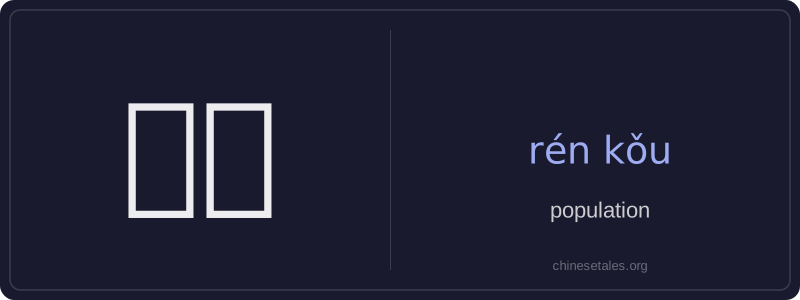
人口 (rén kǒu) literally combines 人 (rén), meaning 'person' or 'human', and 口 (kǒu), which originally means 'mouth' but here functions as a classical unit for counting people—similar to how 'head' is used in English ('head count'). Together, they form the standard term for 'population' in Chinese, referring to the total number of people living in a specific area, such as a city, province, or country.
This word is commonly used in formal, statistical, and administrative contexts—like census reports, news headlines, policy discussions, and geography lessons. It rarely appears in casual daily speech on its own; instead, speakers often use phrases like 人口数量 (rén kǒu shù liàng, 'population size') or 人口密度 (rén kǒu mì dù, 'population density'). Unlike English, 人口 is almost always unmodified by measure words when used abstractly (e.g., not *一人口*), and it’s typically preceded by a classifier or location noun (e.g., 北京的人口, 'Beijing's population').
Example Sentences
Related Words
背后
背后 literally means 'back + behind' and functions
见面
见面 literally means 'see face' — combining 见 (t
面条
‘面条’ (miàn tiáo) literally means ‘flour str
我的
我的 (wǒ de) is a possessive pronoun meaning 'my'
中学
'Zhōngxué' literally combines 'zhōng' (middle)
后来
Later (hòulái) is an adverb meaning 'afterwards'
在家
'Zài jiā' literally combines the preposition 'z
不对
不对 (bù duì) literally combines 不 (bù), meani