Word Explanation
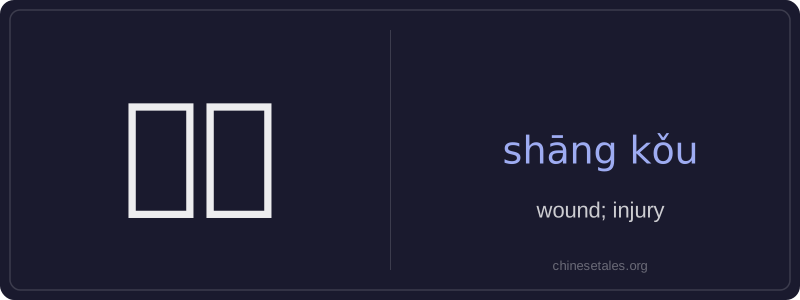
‘伤口’ literally combines ‘伤’ (shāng), meaning ‘injury’ or ‘harm’, and ‘口’ (kǒu), meaning ‘opening’ or ‘mouth’. Together, they form a compound noun meaning ‘wound’—specifically a break in the skin or tissue caused by trauma, such as a cut, scrape, or puncture. Unlike broader terms like ‘伤害’ (harm/injury) or ‘疾病’ (illness), ‘伤口’ refers only to physical, external injuries with visible openings.
This word is commonly used in medical contexts, first-aid discussions, and everyday descriptions of minor injuries—like scrapes from falling or cuts while cooking. It’s neutral in register and appropriate for both spoken and written Chinese. While ‘伤’ alone can mean injury in a general sense, adding ‘口’ specifies a tangible, surface-level breach. It’s rarely used metaphorically; for emotional pain, native speakers prefer expressions like ‘心碎’ (heartbreak) or ‘心理创伤’ (psychological trauma).
Example Sentences
Related Words
背后
背后 literally means 'back + behind' and functions
见面
见面 literally means 'see face' — combining 见 (t
面条
‘面条’ (miàn tiáo) literally means ‘flour str
我的
我的 (wǒ de) is a possessive pronoun meaning 'my'
中学
'Zhōngxué' literally combines 'zhōng' (middle)
后来
Later (hòulái) is an adverb meaning 'afterwards'
在家
'Zài jiā' literally combines the preposition 'z
不对
不对 (bù duì) literally combines 不 (bù), meani