Word Explanation
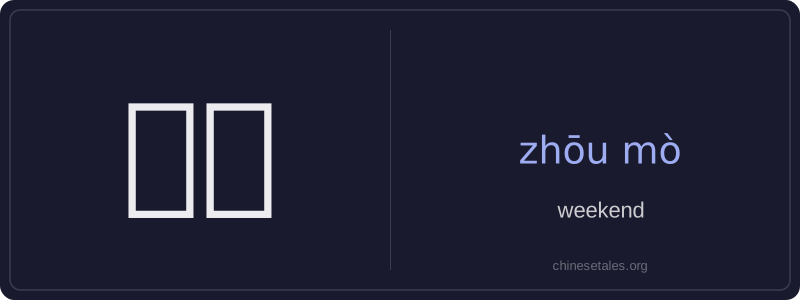
周末 literally means 'end of the week' — 周 (zhōu) means 'week', and 末 (mò) means 'end' or 'tail'. Together, they refer to the two days at the end of the standard seven-day week: Saturday and Sunday. In China, the weekend is widely recognized as a time for rest, leisure, family activities, and personal errands — similar to English usage, though some people may work on Saturday depending on their industry or schedule.
The term is neutral in register and used in both spoken and written Chinese across all ages and contexts. It commonly appears in schedules, invitations, news reports, and casual conversation. Unlike some English dialects that use 'the weekend' with a definite article, 周末 does not require a classifier or determiner — it functions as a standalone time noun, often modified by words like 这 (this), 下 (next), or 上 (last).
Example Sentences
Related Words
背后
背后 literally means 'back + behind' and functions
见面
见面 literally means 'see face' — combining 见 (t
面条
‘面条’ (miàn tiáo) literally means ‘flour str
我的
我的 (wǒ de) is a possessive pronoun meaning 'my'
中学
'Zhōngxué' literally combines 'zhōng' (middle)
后来
Later (hòulái) is an adverb meaning 'afterwards'
在家
'Zài jiā' literally combines the preposition 'z
不对
不对 (bù duì) literally combines 不 (bù), meani