Word Explanation
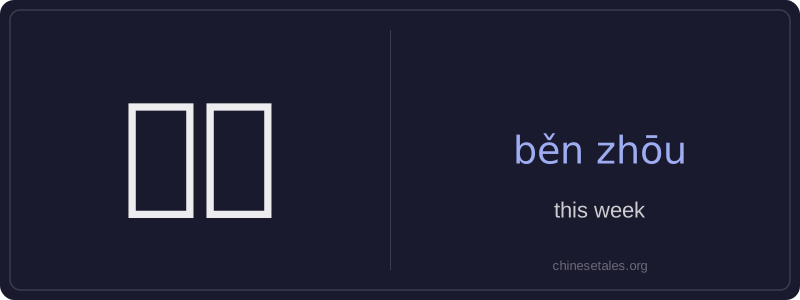
本周 literally means 'this week' and is composed of 本 (běn), meaning 'this' or 'current', and 周 (zhōu), meaning 'week'. It functions as a time noun indicating the seven-day period that includes today and extends from Monday to Sunday (though in some contexts it may be understood relative to the current day, e.g., 'the week starting today'). Unlike more casual expressions like 这周 (zhè zhōu), 本周 is slightly more formal and commonly appears in written Chinese—such as in work emails, news reports, schedules, and official announcements.
It’s often used with verbs like 是 (shì), 有 (yǒu), 要 (yào), or 来自 (lái zì) to describe events, plans, or statistics pertaining to the current week. Because it’s time-specific and deictic (centered on 'now'), its reference shifts daily: what counts as 本周 changes every Monday at midnight. It does not require measure words and cannot be pluralized or modified by degree adverbs like very or quite.
Example Sentences
Related Words
背后
背后 literally means 'back + behind' and functions
见面
见面 literally means 'see face' — combining 见 (t
面条
‘面条’ (miàn tiáo) literally means ‘flour str
我的
我的 (wǒ de) is a possessive pronoun meaning 'my'
中学
'Zhōngxué' literally combines 'zhōng' (middle)
后来
Later (hòulái) is an adverb meaning 'afterwards'
在家
'Zài jiā' literally combines the preposition 'z
不对
不对 (bù duì) literally combines 不 (bù), meani