Word Explanation
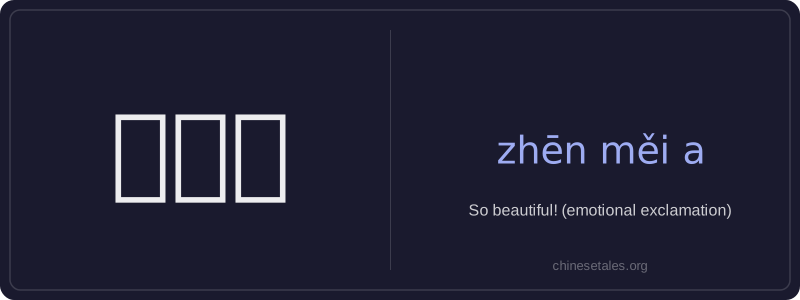
'真美啊' is an emotional exclamation used to express spontaneous, heartfelt admiration for something visually or aesthetically pleasing. The word '真' (zhēn) means 'truly' or 'really', intensifying the adjective '美' (měi), meaning 'beautiful'. The final particle '啊' (a) softens the tone and adds warmth, surprise, or sincerity — it’s not a question marker here, but an exclamatory modal particle that makes the phrase sound natural and conversational in spoken Chinese.
This phrase is commonly used in everyday situations: when seeing a sunset, visiting a garden, admiring someone’s artwork, or even reacting to a baby’s smile. It carries positive emotional weight and reflects genuine appreciation, not just polite observation. Unlike formal equivalents like '非常美丽', '真美啊' feels intimate and immediate — you’d say it aloud, often with rising intonation and open body language. It’s rarely written in formal texts but appears frequently in dialogue, social media captions, and personal journals.
Example Sentences
Related Words
背后
背后 literally means 'back + behind' and functions
见面
见面 literally means 'see face' — combining 见 (t
面条
‘面条’ (miàn tiáo) literally means ‘flour str
我的
我的 (wǒ de) is a possessive pronoun meaning 'my'
中学
'Zhōngxué' literally combines 'zhōng' (middle)
后来
Later (hòulái) is an adverb meaning 'afterwards'
在家
'Zài jiā' literally combines the preposition 'z
不对
不对 (bù duì) literally combines 不 (bù), meani