Word Explanation
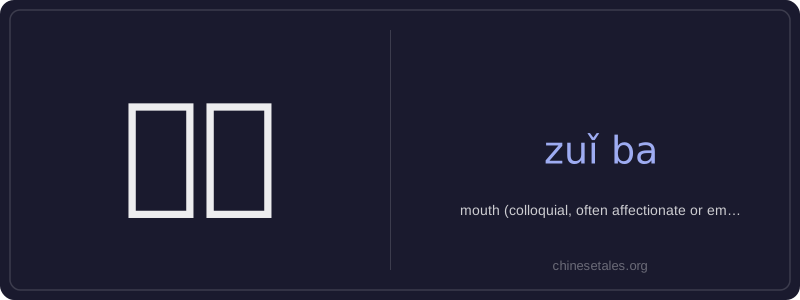
嘴巴 (zuǐ ba) is a colloquial, warm, and often affectionate or emphatic term for 'mouth' in Mandarin. While the character 嘴 alone means 'mouth' and is neutral or slightly formal, adding the diminutive suffix 巴 softens the word, making it sound more natural in everyday speech—especially when referring to people (e.g., children, pets) or expressing vivid physical descriptions. It’s frequently used in informal contexts like storytelling, caregiving, or describing facial expressions.
The two characters combine literally: 嘴 denotes the oral cavity used for speaking and eating, while 巴 is a common monosyllabic suffix that adds familiarity or cuteness, similar to how '-y' or '-ie' works in English (e.g., 'doggy'). Unlike the formal synonym 口 (kǒu), which appears in compounds like 口语 (spoken language) or 出口 (exit), 嘴巴 rarely appears in technical or written registers—it’s firmly rooted in spoken, interpersonal communication.
Example Sentences
Related Words
背后
背后 literally means 'back + behind' and functions
见面
见面 literally means 'see face' — combining 见 (t
面条
‘面条’ (miàn tiáo) literally means ‘flour str
我的
我的 (wǒ de) is a possessive pronoun meaning 'my'
中学
'Zhōngxué' literally combines 'zhōng' (middle)
后来
Later (hòulái) is an adverb meaning 'afterwards'
在家
'Zài jiā' literally combines the preposition 'z
不对
不对 (bù duì) literally combines 不 (bù), meani